The Minnesota Vikings are a professional American football franchise founded on January 28, 1960, as the NFL's 14th team. The team began play in the 1961 season and has been based in Minneapolis, Minnesota, throughout its history. The Vikings' name reflects the region's Scandinavian American heritage, and the team has been a consistent contender, winning four conference championships, including the NFL Championship in 1969. Despite appearing in four Super Bowls, the Vikings have not won the league's ultimate championship. The franchise has played its home games at three primary stadiums in the Twin Cities metropolitan area and has compiled an all-time regular season record of 537 wins, 438 losses, and 11 ties. Their .550 winning percentage is the highest among NFL franchises that have never won a Super Bowl.
Franchise Founding and Early Ownership
The effort to bring a professional football team to Minnesota started in August 1959. At that time, a group of Minneapolis businessmen consisting of Bill Boyer, H.P. Skoglund, and Max Winter received a franchise in the newly formed American Football League. This group, along with Bernard H. Ridder, later decided to join the National Football League instead. On January 28, 1960, the NFL awarded them its 14th expansion franchise. The team's distinctive nickname was suggested by its first general manager, Bert Rose, and formally chosen on September 27, 1960. Investor Ole Haugsrud was part of the ownership group because of a contract from the 1920s that guaranteed him a ten percent ownership stake in any future NFL team located in Minnesota after he sold his Duluth Eskimos back to the league.
The First Decade and Early Struggles (1961 to 1966)
The Vikings' inaugural season in 1961 was led by head coach Norm Van Brocklin, a Hall of Fame quarterback hired on January 18, 1961. The team made a debut on September 17, 1961, defeating the Chicago Bears 37-13 in their first regular-season game at Metropolitan Stadium. In that game, rookie quarterback Fran Tarkenton, a third-round draft pick, replaced starter George Shaw and completed 17 of 23 passes for 250 yards, throwing four touchdown passes and rushing for another. Despite this promising start, the expansion team lost its next seven games and finished its first season with a 3-11 record. Bert Rose resigned as general manager in June 1964 and was succeeded by Jim Finks in September 1964. The Vikings achieved their first winning season in 1964 under Van Brocklin, posting an 8-5-1 record and tying for second place in the NFL Western Conference. Key events in the franchise's early years.
- January 28, 1960: NFL awards the 14th franchise to Minnesota.
- September 27, 1960: Team officially named the Minnesota Vikings.
- August 5, 1960: Bert Rose appointed first general manager.
- December 27, 1960: First college draft. RB Tommy Mason selected first overall.
- September 17, 1961: First regular-season game, a 37-13 win over Chicago.
- 1964: First winning season (8-5-1) and Jim Finks hired as GM.
- February 1967: Norm Van Brocklin resigns as head coach.
The Bud Grant Era and Championship Success (1967 to 1985)
Following Van Brocklin's departure, the Vikings hired Bud Grant as head coach on March 11, 1967. Grant came from the Canadian Football League's Winnipeg Blue Bombers, where he had won four Grey Cup championships. A significant trade occurred on March 7, 1967, when the team sent quarterback Fran Tarkenton to the New York Giants. In return, the Vikings received a first-round and a second-round selection in 1967, a first-round selection in 1968, and a second-round choice in 1969. Minnesota used those selections to add players Clinton Jones and Bob Grim in 1967, offensive tackle Ron Yary in 1968, and guard Ed White in 1969. Under Grant, the Vikings built a noted defense known as the "Purple People Eaters," anchored by Alan Page, Carl Eller, Gary Larsen, and Jim Marshall. This unit propelled the team to its first playoff berth and Central Division title in 1968.
In 1969, the Vikings posted a 12-2 record, the best in the NFL, and defeated the Cleveland Browns 27-7 to win the NFL Championship at Metropolitan Stadium. This victory earned the team a berth in Super Bowl IV, where they lost to the Kansas City Chiefs 23-7 at Tulane Stadium. The Grant era was defined by consistent playoff appearances, with the Vikings winning 11 division titles in a 13-season span. The team also won NFC championships in 1973, 1974, and 1976, appearing in Super Bowls VIII, IX, and XI, but lost each time. In 1971, defensive tackle Alan Page became the first defensive player to win the NFL Most Valuable Player Award. Bud Grant first retired after the 1983 season but returned to coach in 1985 before retiring permanently with a career record of 168 wins, 108 losses, and 5 ties, making him the eighth-winningest coach in NFL history at the time.
Stadium History and Relocations
The Minnesota Vikings have had three primary home stadiums, all located within the Minneapolis, Saint Paul metropolitan area. From their inaugural 1961 season through 1981, the team played at Metropolitan Stadium in Bloomington, Minnesota. The stadium's capacity was initially 40,800 seats. The team's marketing efforts were successful from the start, resulting in the sale of almost 26,000 season tickets and an average game attendance of 34,586 fans during that first year, filling about 85 percent of the stadium. The capacity was later expanded. In 1982, the Vikings moved into the Hubert H. Humphrey Metrodome in downtown Minneapolis, a domed stadium with a capacity of approximately 63,000 that hosted Super Bowl XXVI. The team played there through the 2013 season, defeating the Detroit Lions 14-13 in their final game at the venue. During the construction of a new stadium, the Vikings played temporary home games at TCF Bank Stadium on the University of Minnesota campus from 2014 to 2015. In 2016, the franchise moved into its current home, U.S. Bank Stadium in Minneapolis, a state-of-the-art facility with a translucent roof and a capacity of 66,860.
| Stadium | Location | Years Active | Notable Event |
|---|---|---|---|
| Metropolitan Stadium | Bloomington, MN | 1961 to 1981 | 1969 NFL Championship |
| Hubert H. Humphrey Metrodome | Minneapolis, MN | 1982 to 2013 | Hosted Super Bowl XXVI |
| TCF Bank Stadium (temp) | Minneapolis, MN | 2014 to 2015 | Interim home during construction |
| U.S. Bank Stadium | Minneapolis, MN | 2016 to present | Current home stadium |
Team Identity and Visual Design
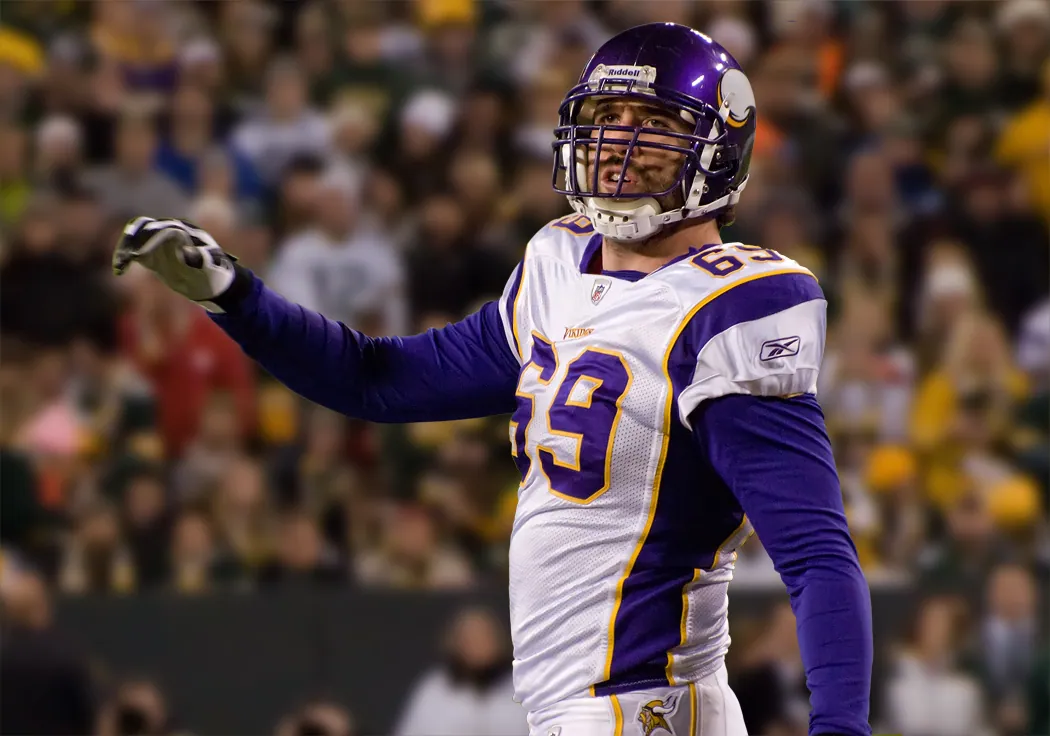
The visual identity of the Minnesota Vikings is one of the most recognizable in professional sports. The team's famous horned helmet and purple-and-gold color scheme were created by cartoonist Karl Hubenthal of the Los Angeles Examiner. General manager Bert Rose, a University of Washington alumnus, instructed Hubenthal to use his alma mater's colors for the uniform design. Hubenthal also created the team's original Norseman logo. These basic design elements have remained largely unchanged since the team's inception. The color purple is relatively rare among NFL teams, helping to establish a unique brand. The team's fight song is "Skol, Vikings," and its mascot is named Viktor the Viking. This consistent branding has contributed to a strong and loyal fan base throughout the franchise's history.
Post-Grant Coaching Eras and Playoff Runs
After Bud Grant's final retirement, the Vikings entered a period with several head coaches. Jerry Burns led the team from 1986 to 1991, reaching the playoffs three times and the NFC Championship Game in the 1987 season. Dennis Green served as head coach from 1992 to 2001, a tenure that included the memorable 1998 season where the Vikings, led by quarterback Randall Cunningham and rookie receiver Randy Moss, set an NFL record for points scored and finished 15-1 before losing in the NFC Championship Game. From the 1999 season through 2025, the Vikings compiled a regular season record of 233-202-2 and a playoff record of 6-11 in 17 postseason games. The team reached the NFC Championship Game three times in this period: in the 2000 season (a 41-0 loss to the New York Giants), the 2009 season (a 31-28 loss to the New Orleans Saints), and the 2017 season (a 38-7 loss to the Philadelphia Eagles).
The 21st Century: Zimmer and O'Connell Eras
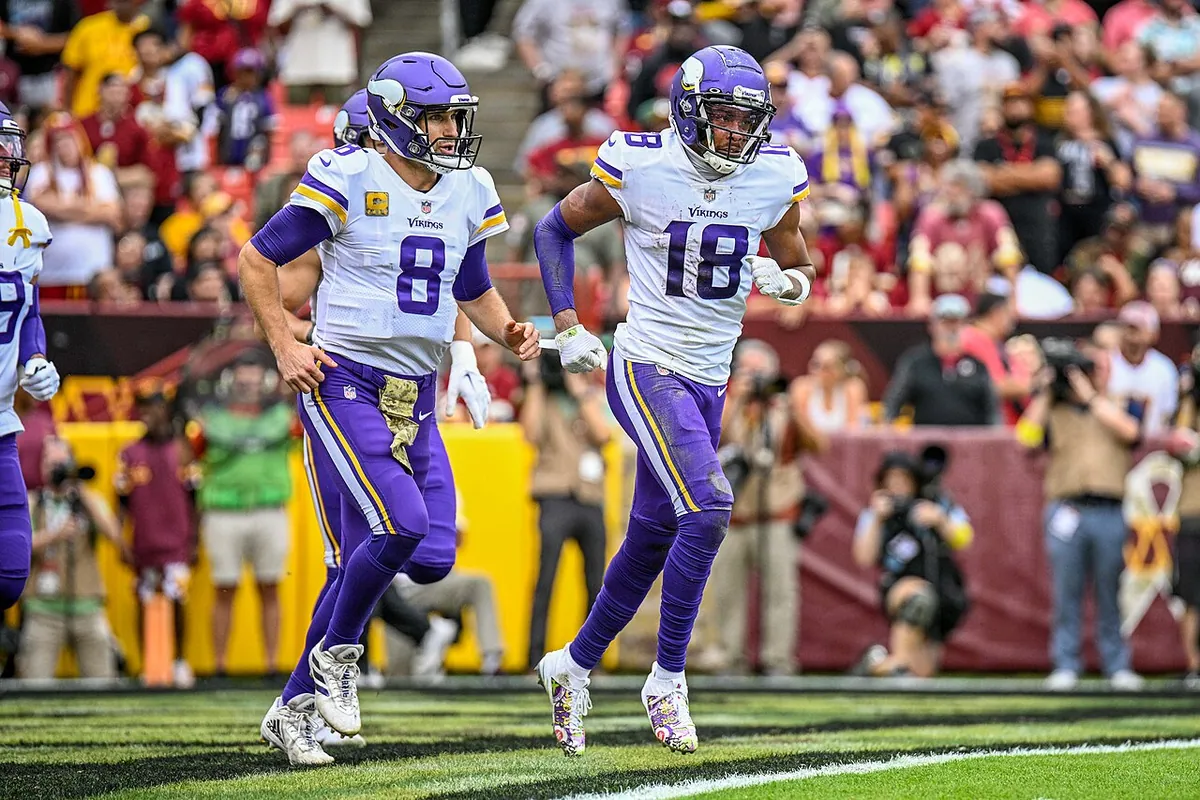
Mike Zimmer coached the team from 2014 to 2021, posting a regular season record of 72-56-1 and a playoff mark of 2-3. His best season was 2017, when the Vikings went 13-3 and advanced to the NFC Championship Game. Kevin O'Connell became head coach in 2022 and, through games of November 27, 2026, has a regular season record of 50-28. The 2022 season saw the team finish 13-4, though it lost in the Wild Card round. The 2024 season was a highlight, with the team finishing 14-3, which is one of the best regular seasons since 1999, alongside the 13-3 record in 2017 and the 13-4 record in 2022. The 2026 season is in progress, with the team holding a 7-3 record as of late November. Since 1999, the team's longest winning streak across all games is 11 games, spanning from December 7, 2025, to October 25, 2026. Head coaches and their records from the 1999 season onward.
- Dennis Green (1999 to 2001): 26-21 regular season, 2-2 playoffs.
- Mike Tice (2001 to 2005): 32-33 regular season, 1-1 playoffs.
- Brad Childress (2006 to 2010): 39-35 regular season, 1-2 playoffs.
- Leslie Frazier (2010 to 2013): 21-32-1 regular season, 0-1 playoffs.
Championships and Postseason Record
The Minnesota Vikings have won one NFL championship, capturing the title in 1969 before the AFL-NFL merger. Since the 1970 merger, the team has won three NFC conference championships (1973, 1974, 1976), in addition to the NFL Championship won in 1969. The Vikings lost all four Super Bowl appearances. The franchise has qualified for the playoffs 30 times and has won its division 20 times throughout its history. In the period from the 1999 season through 2025, the team participated in 17 playoff games, winning 6 and losing 11. The Vikings' all-time regular season winning percentage is among the highest for franchises that have not won a Super Bowl. The team's most recent conference championship game appearance was in the 2017 season.
Ownership and Legacy
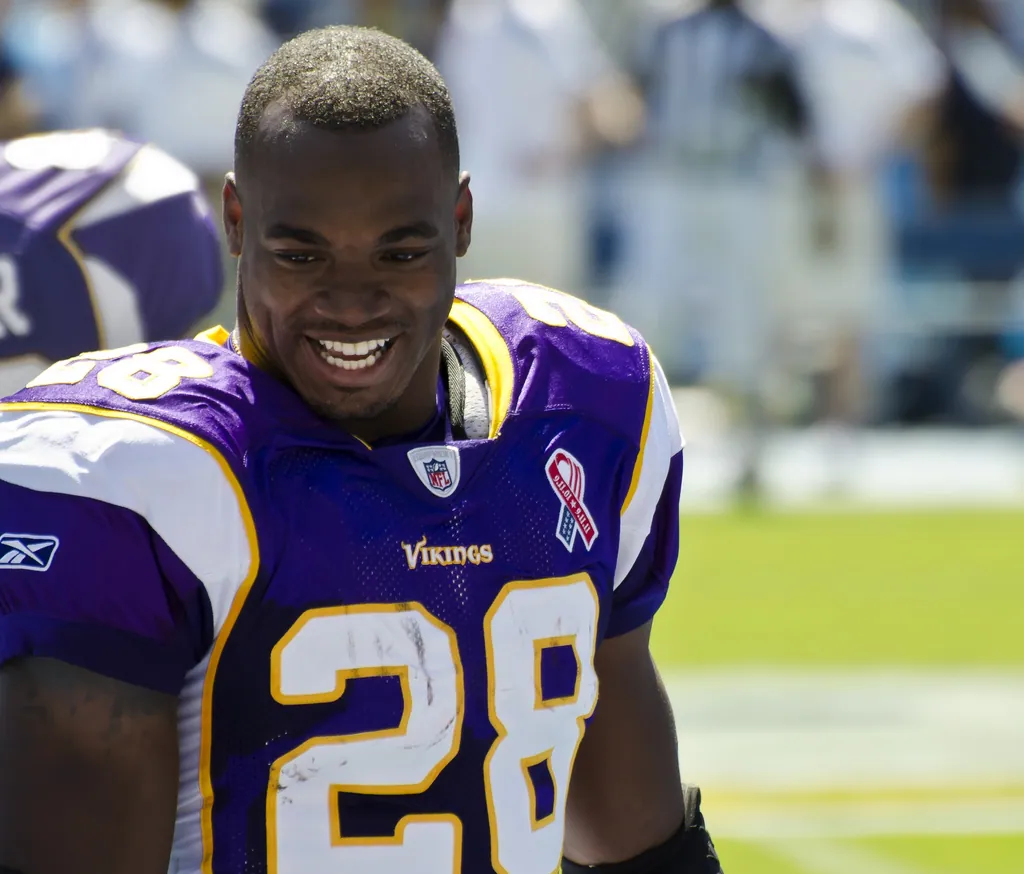
The franchise's original ownership group consisted of Max Winter, Bill Boyer, H.P. Skoglund, Ole Haugsrud, and Bernard H. Ridder. Max Winter served as team president starting in 1965. The team's ownership changed hands in later decades. As of 2026, the Vikings are owned by Zygi Wilf, with Mark Wilf serving as team president. The general manager is Nolan Teasley, and the head coach is Kevin O'Connell. The team's headquarters and practice facility is the TCO Performance Center in Eagan, Minnesota. This stable ownership and management structure has overseen the team's move to U.S. Bank Stadium and its operations in the modern NFL, maintaining one of the league's most distinct identities. The Vikings have the most playoff runs and division titles of any NFL team that has not won a Super Bowl, and they are one of only four franchises to appear in a conference championship game in every decade since the 1970s.
Video
FAQ
When were the Minnesota Vikings founded?
The NFL awarded an expansion franchise to a group of Minnesota businessmen on January 28, 1960. This group had initially committed to the American Football League in August 1959 but later joined the NFL. The team began its first season of play in 1961, becoming the league's 14th franchise. The founding owners were Max Winter, Bill Boyer, H.P. Skoglund, Ole Haugsrud, and Bernard H. Ridder.
Why are they called the Vikings?
The nickname "Vikings" was recommended by the team's first general manager, Bert Rose, and officially adopted on September 27, 1960. The name was chosen to represent an aggressive person with the will to win. It also reflects the prominent Scandinavian American culture and heritage in the northern Midwest, particularly in Minnesota. The legal right to the name came from Harry Gustafson, who had copyrighted it for a bowling team.
Have the Minnesota Vikings ever won a Super Bowl?
No, the Minnesota Vikings have never won a Super Bowl. They have appeared in four Super Bowls: IV (1969 season), VIII (1973 season), IX (1974 season), and XI (1976 season), losing each game. The franchise did win the NFL Championship in 1969, the season before the AFL-NFL merger, which earned them their first Super Bowl berth. Since the merger, they have lost three NFC Championship games in 2000, 2009, and 2017.
What stadiums have the Vikings called home?
The Vikings have had three main home stadiums. They played at Metropolitan Stadium in Bloomington from 1961 to 1981. From 1982 to 2013, they played at the Hubert H. Humphrey Metrodome in Minneapolis. Since 2016, they have played at U.S. Bank Stadium, also in Minneapolis. During the construction of U.S. Bank Stadium, they played temporary home games at TCF Bank Stadium on the University of Minnesota campus from 2014 to 2015.
Who was the Vikings' first head coach and what was their first game like?
The Vikings' first head coach was Norm Van Brocklin, hired on January 18, 1961. The team's first regular-season game was on September 17, 1961, at Metropolitan Stadium. They defeated the Chicago Bears 37-13 in a upset. In that game, rookie quarterback Fran Tarkenton entered the game and passed for four touchdowns and ran for another. The expansion team finished its first year with a 3-11 record.
What was the Minnesota Vikings' first regular season game and its result?
The Minnesota Vikings' first regular season game was on September 17, 1961, against the Chicago Bears at Metropolitan Stadium. The Vikings won the game 37-13 in a upset. Rookie quarterback Fran Tarkenton came off the bench to throw four touchdown passes and run for another score. This victory marked a successful debut for the expansion franchise, though they would finish the 1961 season with a 3-11 record.
Sources
- History of the Minnesota Vikings (Wikipedia) Wikipedia
- Minnesota Vikings (Wikipedia) Wikipedia
- Vikings History Timeline | Minnesota Vikings, vikings.com vikings.com
- Team history Pro Football Hall of Fame
- Minnesota Vikings News, Scores, Stats, Schedule NFL
- From Ice to Glory: The Full-Fledged History of the Minnesota Vikings albertleatribune.com
- History of the Minnesota Vikings Facts for Kids kids.kiddle.co
- nflverse game, roster and draft data nflverse (CC BY 4.0)