Charles Henry Chuck Noll was an American football player and head coach. He served as the head coach of the Pittsburgh Steelers from 1969 to 1991, the only head coaching position of his career. Noll won four Super Bowls with the Steelers in a six-year span and compiled an overall record of 209 wins, 156 losses, and one tie. He was elected to the Pro Football Hall of Fame in 1993 and is credited with transforming the Steelers from a struggling franchise into a dynasty. His teams won nine division championships and appeared in 12 playoffs over his 23 seasons.
Early Life and Playing Career
Chuck Noll was born on January 5, 1932, in Cleveland, Ohio, as the youngest of three children. His father was a butcher and his mother a florist, and the family lived in a lower-income, racially integrated neighborhood on Cleveland's East Side. To afford tuition at the private Benedictine High School, Noll worked jobs including as a paperboy, golf caddy, pinsetter, and gravedigger. He played running back and tackle for the Benedictine football team, winning All-State honors and making the All Catholic Universe team. During high school, Noll was diagnosed with epilepsy, a condition he managed throughout his life.
Noll initially aimed to play at Notre Dame but was cut after a seizure during a tryout. He then accepted a football scholarship to the University of Dayton. At Dayton, he played as a lineman and linebacker, served as a co-captain, and earned the nickname the Pope for his deep understanding of the game. He graduated in 1953 with a degree in secondary education. The Cleveland Browns selected Noll with the 239th overall pick in the 20th round of the 1953 NFL draft.
Noll played seven seasons for the Cleveland Browns from 1953 to 1959. He appeared in 77 games, starting 64, as a guard and linebacker. He recorded eight interceptions and three fumble recoveries during his career, scoring a touchdown on an interception and a fumble recovery. Browns coach Paul Brown used Noll as a messenger guard to relay plays, a role Noll later said he disliked. He retired at age 27 when he lost his starting guard position, intending to begin a coaching career at his alma mater.
Assistant Coaching Career
After his playing career ended, Chuck Noll was not offered a job at the University of Dayton. Instead, he joined the staff of Sid Gillman with the Los Angeles Chargers of the American Football League in 1960. Noll served as a defensive line coach, defensive backfield coach, and defensive coordinator over six seasons as the team moved to San Diego. The Chargers appeared in five AFL championship games. The defensive line he coached became known as the Fearsome Foursome, and in 1961 defensive end Earl Faison was named AFL Rookie of the Year.
In 1965, Noll moved to the NFL, joining Don Shula's staff with the Baltimore Colts as defensive backfield coach. He was later promoted to defensive coordinator. Noll worked with assistant coach Bill Arnsparger to implement complex defensive schemes that used shifting alignments of rotating zone and blitz packages. In his final season with the Colts in 1968, the defense allowed only 144 points, tying the NFL record for fewest points allowed. The Colts finished with a 13-1 record, won the NFL championship by defeating the Cleveland Browns 34-0, but then lost Super Bowl III to the New York Jets. The day after that Super Bowl loss, Noll interviewed for the head coaching job with the Pittsburgh Steelers, a position recommended to the team by Don Shula.
Pittsburgh Steelers Head Coaching Tenure: The Rebuild
The Pittsburgh Steelers hired 37-year-old Chuck Noll as their head coach on January 27, 1969, after Penn State coach Joe Paterno declined the position. He inherited a franchise that had only eight winning seasons in its previous 36 years and had never won a playoff game. Noll's first season in 1969 resulted in a 1-13 record, the worst in team history. That record secured the first overall pick in the 1970 NFL Draft, which Noll used to select quarterback Terry Bradshaw from Louisiana Tech. Prior to the 1970 season, Noll cut much of the roster, keeping only 14 players from the 1969 team.
Noll's rebuilding plan centered on the annual college draft and a relentless focus on teaching fundamentals. He told his new team they were not good enough and needed to be replaced. The team improved to a 5-9 record in 1970. Noll implemented the 4-3 defensive system he used in Baltimore, which became famously known as the Steel Curtain defense. This approach focused on controlling the line of scrimmage, stopping the run, and pressuring the quarterback, often through blitzes from linebackers.
The Dynasty Years and Super Bowl Victories
The Steelers' breakthrough came in the 1972 season. The Steelers won their first postseason game against the Oakland Raiders, a victory that included the Immaculate Reception. They lost the AFC Championship game to the undefeated Miami Dolphins 21-17. For the 1972 season, Noll was named the UPI NFL Coach of the Year.
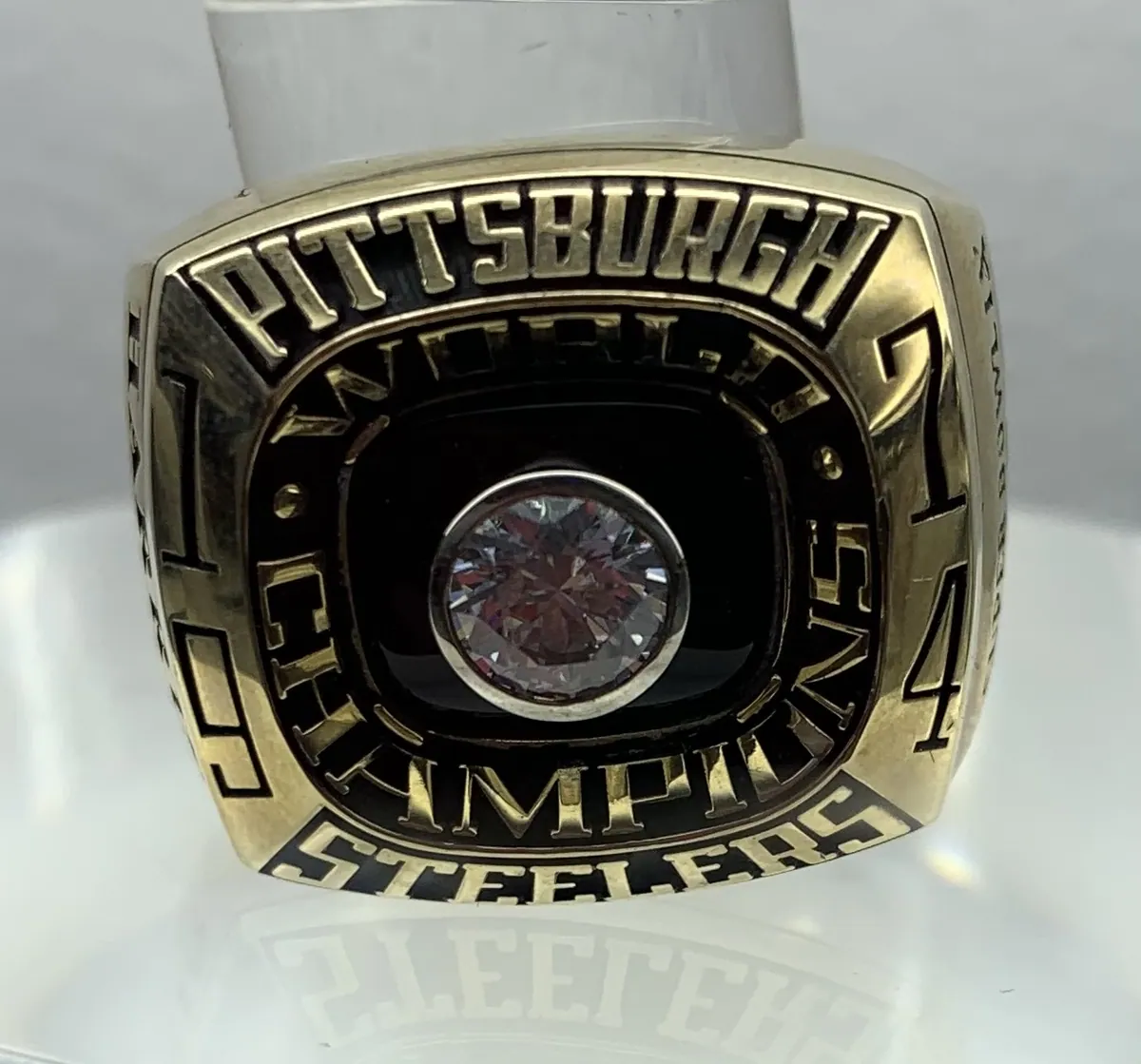
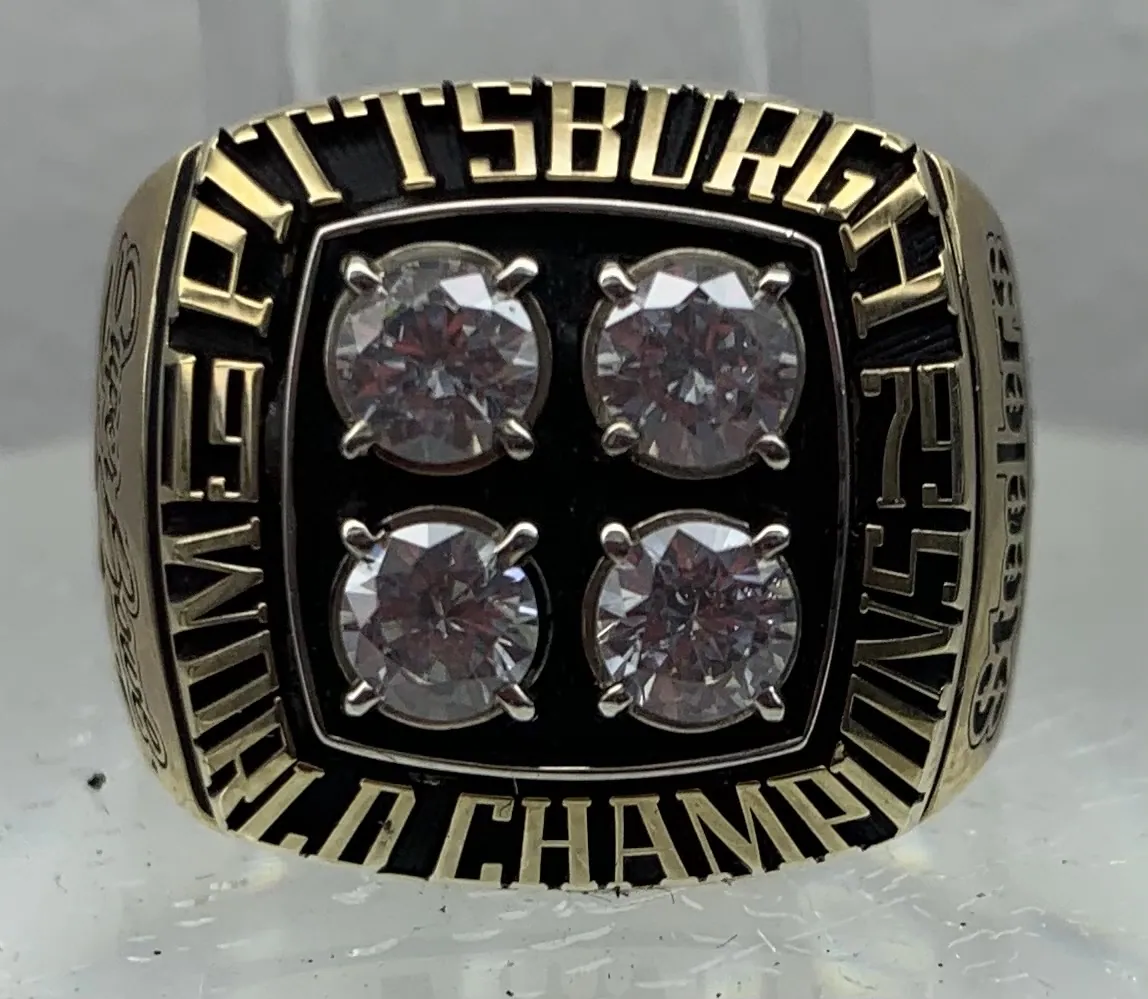
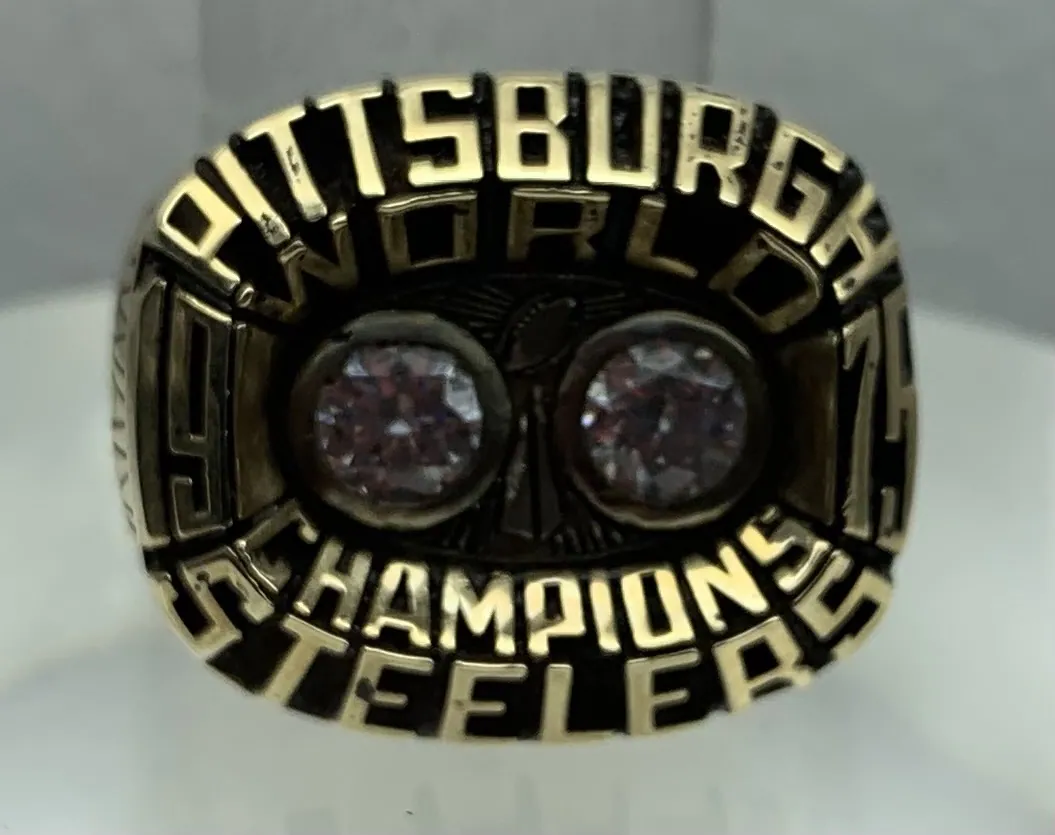
The dynasty era began in 1974. The Steelers finished the regular season 10-3-1 and defeated the Buffalo Bills and Oakland Raiders in the playoffs. They won their first NFL championship in Super Bowl IX, defeating the Minnesota Vikings 16-6. They repeated as champions in Super Bowl X the following year, beating the Dallas Cowboys 21-17. They defeated the Cowboys again in Super Bowl XIII by a score of 35-31 and then beat the Los Angeles Rams 31-19 in Super Bowl XIV. Noll won four Super Bowls.
The offensive identity of the Steelers evolved during this period. The teams that won Super Bowls IX and X featured a run-oriented offense led by Franco Harris and blocking back Rocky Bleier. By the time of Super Bowls XIII and XIV, quarterback Terry Bradshaw had matured, and the offense fully utilized the receiving tandem of Lynn Swann and John Stallworth. Noll was known for a relaxed approach to player discipline, famously telling his team to go out on Bourbon Street before Super Bowl IX to get partying out of their systems.
Later Seasons, Decline, and Retirement
A notable draft decision came in 1983 when Noll elected to pass on University of Pittsburgh quarterback Dan Marino, instead selecting nose tackle Gabriel Rivera. Marino became a Hall of Fame quarterback for the Miami Dolphins, while Rivera's career ended after six games due to a paralyzing car accident. Noll later cited rumors of cocaine use as a factor in the decision. After Terry Bradshaw's retirement, Noll chose Mark Malone as his successor.
The team finished 9-7 in 1984, won the AFC Central, and advanced to the AFC Championship game, where they lost to the Miami Dolphins. The team then entered a period of decline. The 1988 season was particularly difficult, with a 5-11 record that placed the Steelers last in their division. Noll faced criticism that the game had passed him by. Noll rebounded in 1989, guiding a team that lost its first two games by scores of 51-0 and 41-10 to a 9-7 record and a playoff berth. The Steelers won a wild-card game before losing 24-23 to the Denver Broncos in the divisional round. On December 26, 1991, Chuck Noll announced his retirement after 23 seasons as head coach of the Pittsburgh Steelers.
Coaching Record and Playoff Results
Chuck Noll's career head coaching record with the Pittsburgh Steelers was 193 wins, 148 losses, and one tie in the regular season. His postseason record was 16 wins and 8 losses, for a combined career record of 209-156-1. He led the Steelers to 12 playoff appearances, nine AFC Central Division championships, and four AFC championships. His teams had winning records in 15 of his final 20 seasons. The table below details the Steelers' playoff results and Super Bowl appearances under Noll from 1972 onward.
| Season | Playoff Result |
|---|---|
| 1972 | Lost AFC Championship (Dolphins 21-17) |
| 1973 | Lost Divisional Round (Raiders 33-14) |
Coaching Philosophy, Schemes, and Tree
Noll's coaching philosophy was fundamentally that of a teacher. He was a meticulous instructor who focused on technique, famously correcting even Pro Bowl linebacker Andy Russell on his foot positioning. His defensive scheme, the Steel Curtain, was a 4-3 defense that relied on controlling the line of scrimmage with players like Joe Greene and generating pressure through blitzes from linebackers Jack Lambert and Jack Ham. Offensively, his system evolved from a run-heavy attack to one that leveraged Terry Bradshaw's arm strength and elite receivers.
Noll was notoriously private and shunned the media, earning the nickname The Emperor Chaz from broadcaster Myron Cope. He did not believe in rah-rah motivation or strict curfews, expecting players to be professionals. His legacy includes significant contributions to providing opportunities for African Americans in the NFL. Under Noll, Joe Gilliam became the first African American quarterback to start a game for the Steelers during the 1974 season. In 1975, Franco Harris became the first African American to win Super Bowl Most Valuable Player. Noll also hired Tony Dungy as an assistant coach, helping launch Dungy's coaching career. Noll is considered part of Sid Gillman's coaching tree, and he fostered his own branch of influential coaches. His coaching tree includes several prominent figures who worked under him.
Honors and Post-Coaching Life
Chuck Noll received numerous honors for his coaching achievements. The Steelers inducted him into their Hall of Honor as part of the inaugural class in 2017. After retiring in 1991, Noll was given the ceremonial title of administration adviser in the Steelers' front office but had no operational role. He split his time between a home in Sewickley, Pennsylvania, and a residence in Florida. Noll suffered from chronic back problems and Alzheimer's disease in his later years. He maintained a soft-spoken, private nature, granting only occasional interviews. He died of natural causes at his home in Sewickley on June 13, 2014, at the age of 82. His funeral was held at St. Paul's Cathedral in Pittsburgh.
Video
FAQ
What was Chuck Noll's record with the Steelers?
Chuck Noll's overall record with the Pittsburgh Steelers, including regular season and postseason games, was 209 wins, 156 losses, and one tie. His regular season record was 193-148-1, and his playoff record was 16-8. He led the team to 12 playoff appearances, nine division championships, and four AFC championships over his 23-season tenure from 1969 to 1991. His teams had winning records in 15 of his final 20 seasons as head coach.
What happened to Chuck Noll?
Chuck Noll died of natural causes on June 13, 2014, at his home in Sewickley, Pennsylvania. He was 82 years old. He had suffered from Alzheimer's disease and a heart condition. After his coaching career, he lived a private life, splitting time between Pennsylvania and Florida and holding a ceremonial front-office role with the Steelers. His funeral was held at St. Paul's Cathedral in Pittsburgh.
What was Chuck Noll's coaching style?
Chuck Noll's coaching style was centered on teaching fundamentals and technique. He was known as a meticulous instructor who focused on details, often correcting veteran players on basic stances and footwork. He was not a motivational speaker or a disciplinarian regarding curfews. Noll was private, shunned media attention, and believed in building a team through the draft, intelligence, and character rather than through free agency or emotional appeals. He entrusted play-calling to his quarterbacks.
Did Chuck Noll play in the NFL?
Yes, Chuck Noll played seven seasons in the NFL as a guard and linebacker for the Cleveland Browns from 1953 to 1959. He appeared in 77 games, starting 64, and recorded eight interceptions and three fumble recoveries. His playing career ended when he lost his starting job, leading him to retire at age 27 to pursue coaching. He was drafted in the 20th round in 1953.
When and where was Chuck Noll born?
Chuck Noll was born on January 5, 1932, in Cleveland, Ohio. He was the youngest of three siblings in a family where his father was a butcher and his mother was a florist. The family lived in the house his mother grew up in, located near East 74th Street in a neighborhood with a large African-American population. This early environment influenced his later championing of opportunities for African Americans in the NFL.
How many Super Bowls did Chuck Noll win and against which teams?
Chuck Noll won four Super Bowl championships with the Pittsburgh Steelers. His teams defeated the Minnesota Vikings in Super Bowl IX, the Dallas Cowboys in Super Bowl X, the Dallas Cowboys again in Super Bowl XIII, and the Los Angeles Rams in Super Bowl XIV. These victories all occurred within a six-year span in the 1970s. Furthermore, Noll is the only head coach to win four Super Bowls without ever losing one.
Sources
- Chuck Noll (Wikipedia) Wikipedia
- Chuck Noll| Pittsburgh Steelers steelers.com
- Chuck Noll Pro Football Hall of Fame
- Noted Steelers Coach Chuck Noll Fact Blitz upittpress.org
- Chuck Noll | Pennsylvania Center for the Book pabook.libraries.psu.edu