American football is a sport that evolved from early versions of rugby and association football in the late 19th century. The first intercollegiate game was played between Rutgers and Princeton on November 6, 1869, using rules more closely resembling soccer. The game transformed into its distinct American form through a series of rule changes, most notably those introduced by Walter Camp, a Yale University athlete and coach widely considered the Father of American Football. His innovations, including the line of scrimmage, the snap, and the down-and-distance system, created the fundamental structure of the modern sport. The professional game began in 1892 and coalesced into the National Football League in 1920, which grew to become the nation's premier professional sports league.
Ancient Roots and Early American College Games
Games resembling football have ancient origins, with a sport called Episkyros played in Ancient Greece. In Europe, various forms of mob football were played for centuries, involving large numbers of players and few rules. Students at American colleges played their own early versions of football in the early 19th century. Students at Princeton played a game called ballown as early as 1820, while Harvard had a tradition known as Bloody Monday that began before 1827. Dartmouth played its own version called Old division football, with rules published in 1871. These early contests were violent and chaotic, leading to bans at schools like Yale in 1860. The first organized intercollegiate contest recognized as a football game occurred on November 6, 1869, when Rutgers defeated Princeton 6 to 4. This game and its immediate rematch were played under rules based on the London Football Association's code, featuring 25 players per side and prohibiting carrying the ball, making it more akin to soccer. In the early 1870s, colleges began attempting to standardize rules, with representatives from Yale, Columbia, Princeton, and Rutgers meeting in New York City in 1873.
The Shift to Rugby and Harvard's Influence
While other schools met in 1873, Harvard preferred its own Boston game and did not attend the conference. This preference made scheduling games against other American universities difficult, so Harvard agreed to play a two-game series against McGill University in 1874. Harvard won the first game under its own rules 3-0, while the second game under rugby rules ended scoreless. The rugby style appealed to Harvard, particularly the concept of the try that would evolve into the touchdown. Eager to play more rugby, Harvard then challenged its rival Yale. The teams agreed to hybrid Concessionary Rules and used 15 players per side. Their first meeting on November 13, 1875, resulted in a 4-0 victory for Harvard. This contest marked a decisive turn toward rugby football as the preferred model for American intercollegiate play, a shift admired by spectators from Princeton.
Walter Camp and the Creation of American Football
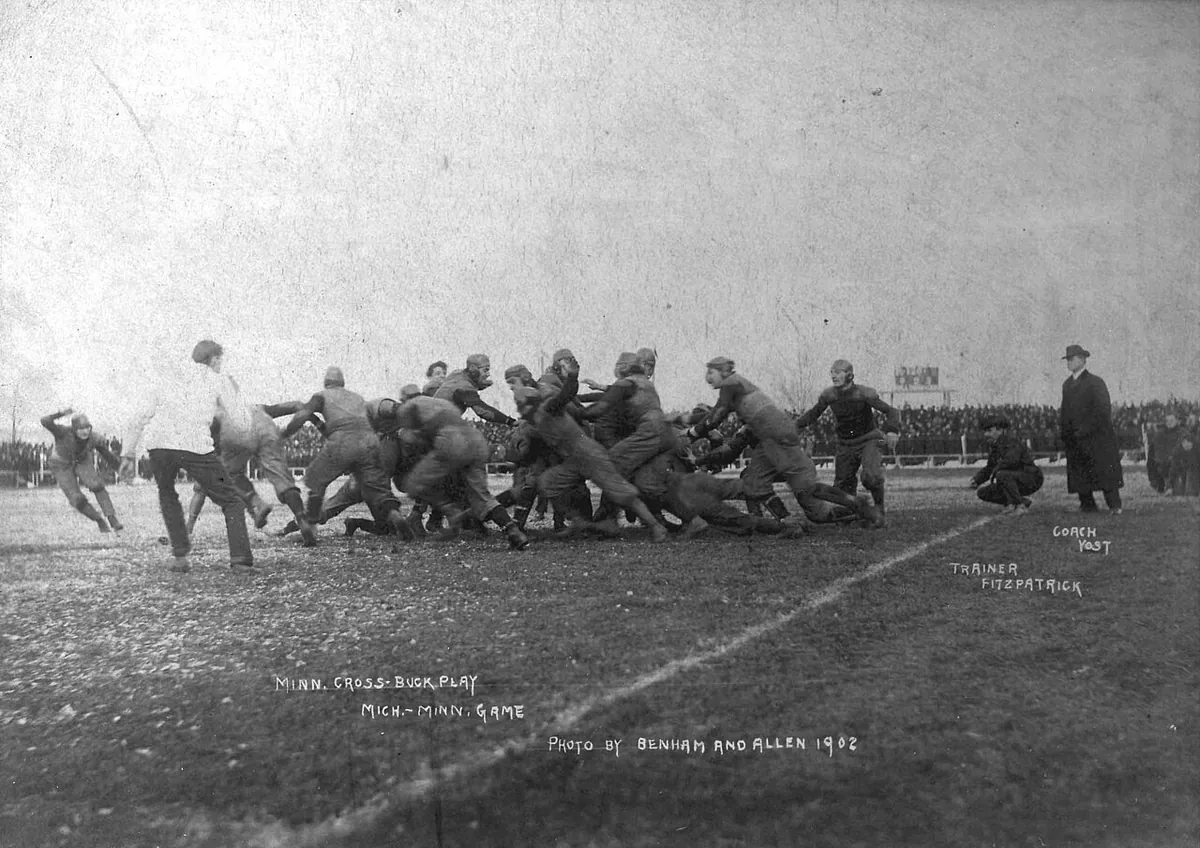
Walter Camp, who enrolled at Yale in 1876, is the central figure in the sport's transformation from rugby into a distinct American code. As a regular attendee at rules conventions held at the Massasoit House, he proposed a series of changes between 1878 and 1882 that defined the new game. His first major proposal was to reduce the number of players on each side from 15 to 11, which was adopted in 1880. That same year, Camp successfully established the line of scrimmage and the snap from center to quarterback, replacing rugby's chaotic scrum. In 1882, to combat stalling tactics used by teams like Princeton, he introduced the down-and-distance rule, requiring a team to advance the ball five yards within three downs or surrender possession. Camp also influenced scoring values, field dimensions, and game timing. Perhaps his most significant contribution was the acceptance of blocking, or interference, which was illegal in rugby. After witnessing tactics to aid ball carriers, Camp adopted and formalized blocking. Complex strategies like the flying wedge were later introduced by Harvard in 1892. His work from 1880 to 1882 effectively created the American football code.
- 1878: Camp first proposes reducing players from 15 to 11 per side.
- 1880: The line of scrimmage and the snap from center are established.
- 1882: The down-and-distance rule (five yards in three downs) is introduced.
- 1883: Camp finalizes a scoring system: 4 points for a touchdown, 5 for a field goal, 2 for a safety.
- 1887: Game time is set at two 45-minute halves, and paid referees are mandated.
- 1889: Officials are given whistles and stopwatches.
The Crisis of 1905 and Revolutionary Rule Changes
The early 20th century saw rule changes to make football safer, including the legalization of the forward pass in 1906. The most revolutionary rule change came in 1906 with the legalization of the forward pass, which opened up the game and reduced dangerous mass formations. Other changes in the early 20th century included adjustments to scoring values and rules to promote safety. Scoring values were also adjusted during this era. The touchdown value rose to 5 points in 1898 and then to its current 6 points in 1912. The field goal was reduced to 4 points in 1904 and then to 3 points in 1909. In 1914, a rule was introduced to penalize roughing the passer. These reforms, spurred in part by presidential concern, helped shape the modern game.
The Birth and Growth of Professional Football
Professional football began as an offshoot of the intense club competitions in industrial towns. The first known professional player was William Pudge Heffelfinger, who was paid $500 by the Allegheny Athletic Association to play in a game against the Pittsburgh Athletic Club on November 12, 1892. This culminated on September 17, 1920, with the founding of the American Professional Football Association in Canton, Ohio. The league was renamed the National Football League in 1922.
| Year | Professional Football Milestone |
|---|---|
| 1892 | First pro player: William Pudge Heffelfinger |
| 1897 | First pro contract (Grant Dibert, Pittsburgh A.C.) |
| 1904 | First known black pro player, Charles Follis |
| 1920 | American Professional Football Association founded |
| 1922 | League renamed the National Football League (NFL) |
The Modern Era: NFL Innovations and National Rise
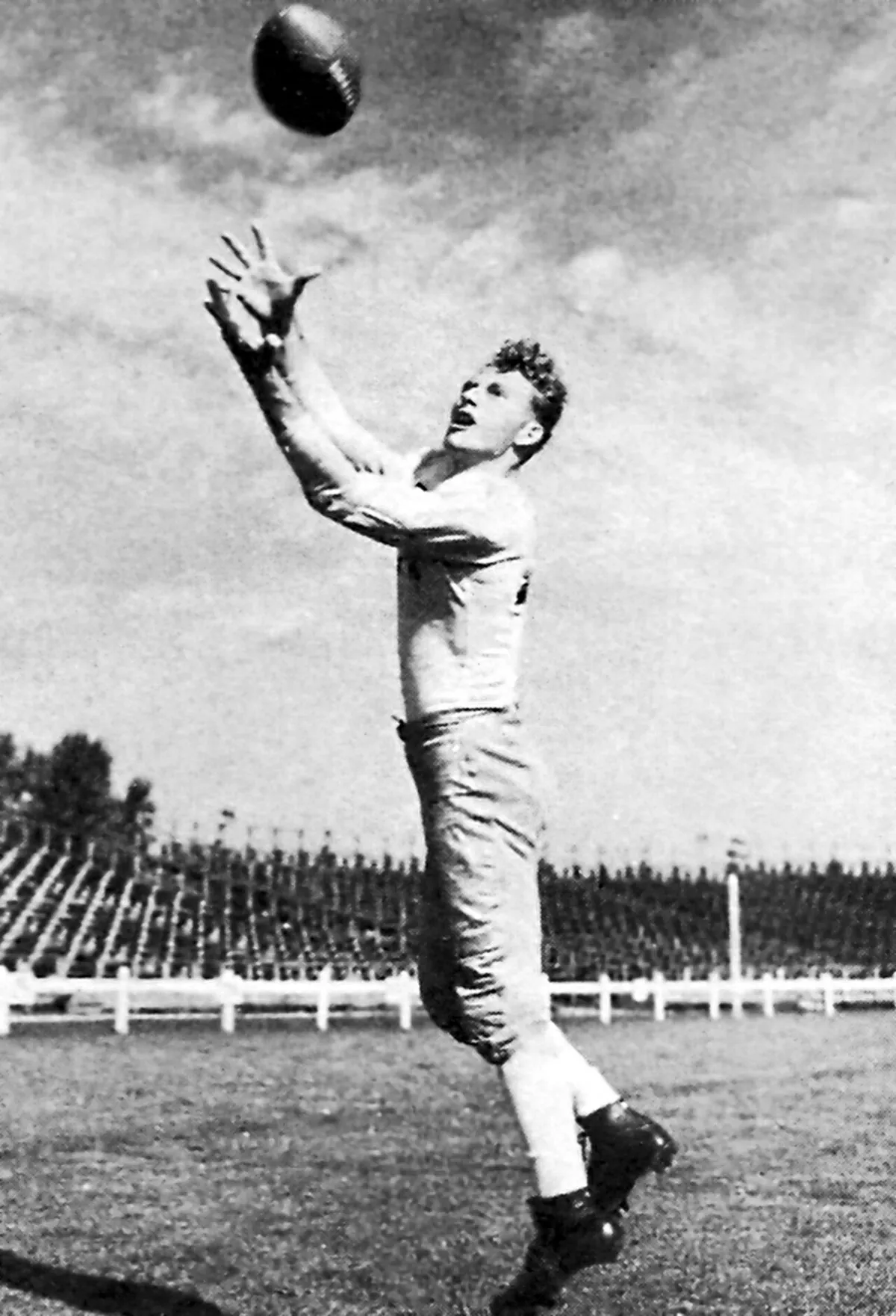
The modern era of American football began to take shape after the 1932 NFL playoff game. This first indoor championship game since 1902 led to several key innovations, including the introduction of hash marks, allowing forward passes from anywhere behind the line of scrimmage, and moving the goalposts back to the goal line. The Associated Press began its college football poll in 1934, the same year the football was redesigned with tapered ends. The Heisman Trophy was first awarded in 1935, the NFL instituted its first draft of college players in 1936, and the first televised football game was broadcast in 1939. The 1958 NFL Championship Game between the Baltimore Colts and New York Giants, dubbed the Greatest Game Ever Played, is credited with catapulting professional football into the national spotlight due to its dramatic overtime finish and national television audience.
College Football's Enduring Traditions and Figures
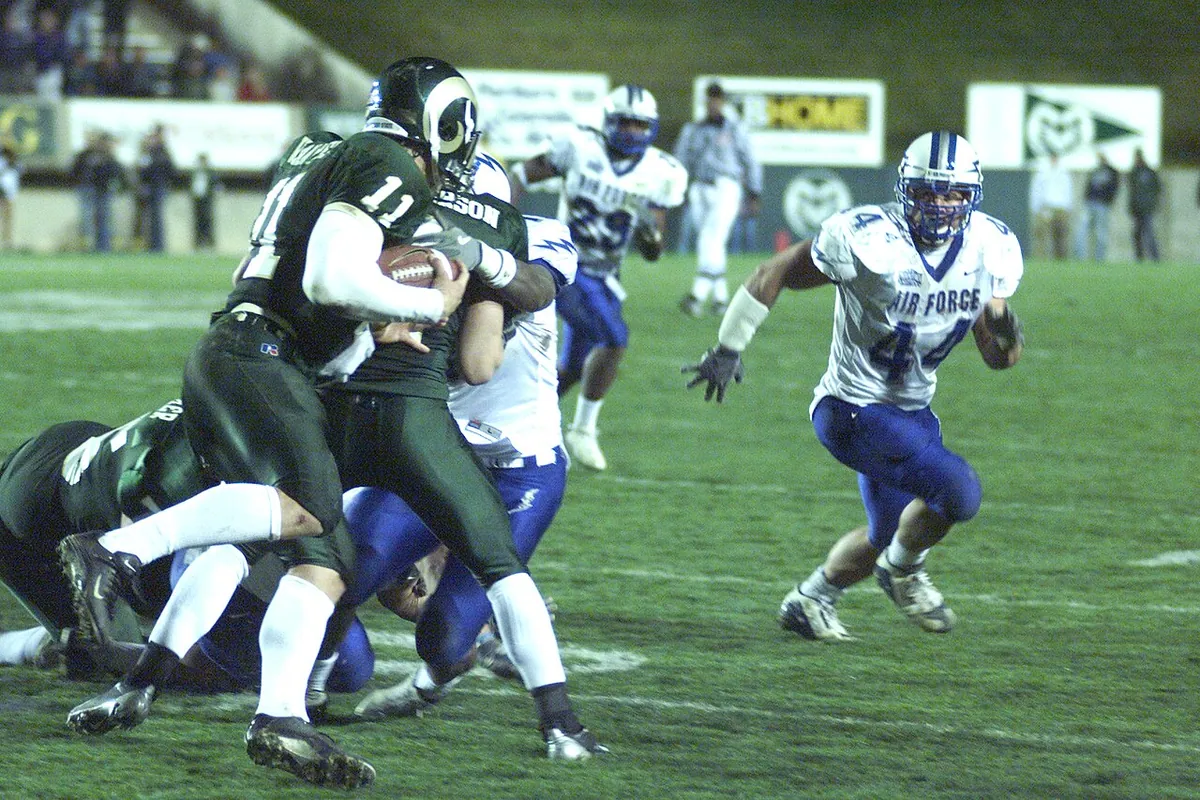
College football was the dominant version of the sport for the first half of the 20th century and remains immensely popular. Bowl games, a college tradition, attracted a national audience for college teams. The first College All-Star Game in 1934, which pitted NFL champions against college stars, was an important factor in the growth of professional football's popularity. The sport has been shaped by noted coaches who developed innovative strategies. Amos Alonzo Stagg had a long and influential coaching career. Knute Rockne of Notre Dame famously used the forward pass to upset Army in 1913. Glenn Pop Warner was a prolific innovator in offensive formations and youth football. Eddie Cochems was a college coach who helped develop the forward pass. Parke H. Davis was a key figure on rules committees and helped outlaw dangerous plays. These figures, along with fierce rivalries and colorful campus traditions, ensured college football's widespread and enduring appeal alongside the professional game.
Video
FAQ
Who invented American football?
American football was not invented by one person, but Walter Camp is recognized as the Father of American Football. As a Yale player and coach in the 1880s, he proposed the rule changes that created the sport's distinct identity. His innovations included establishing the line of scrimmage, the snap from center, and the down-and-distance system. These changes, adopted between 1880 and 1882, transformed the rugby-style game played by colleges into the foundational code of American football.
What was the first American football game?
The first intercollegiate American football game was played on November 6, 1869, between Rutgers University and Princeton University. Rutgers won the contest by a score of 6 to 4. This game, however, was played under rules based on association football, featuring 25 players per side and prohibiting players from carrying the ball. It bore little resemblance to the modern sport, which would evolve from rugby-style rules adopted by Harvard and other schools in the 1870s.
How did professional football begin?
Professional football began with club teams in industrial towns. The first known professional was William Pudge Heffelfinger, paid $500 to play for the Allegheny Athletic Association in 1892. Early leagues were unstable, but the sport found a foothold in Ohio, leading to the founding of the American Professional Football Association in Canton on September 17, 1920. This league was renamed the National Football League in 1922.
What event is considered the start of the NFL's modern popularity?
The 1958 NFL Championship Game between the Baltimore Colts and New York Giants is widely considered the event that launched the NFL into national prominence. This contest, known as the Greatest Game Ever Played, had a dramatic finish that captured the nation's attention. The dramatic finish captured the nation's attention and demonstrated the professional game's excitement. This popularity surge helped pave the way for the league's expansion and its eventual merger with the AFL.
How did the forward pass become part of American football?
The forward pass was legalized as a rule change in the early 20th century, partly to make the game safer and more open. Following its introduction, college coaches like Eddie Cochems, Amos Alonzo Stagg, Parke H. Davis, Knute Rockne, and Glenn 'Pop' Warner developed gameplay strategies to take advantage of this new tactic. The forward pass, combined with Walter Camp's earlier innovations like the line of scrimmage, fundamentally transformed American football from a rugby variant into a distinct sport. Its strategic use was further cemented by rules like those in the 1932 NFL Playoff game, which allowed passes from anywhere behind the line.
What was the 'Boston game' that Harvard played?
Harvard University played its own code of football known as the 'Boston game.' This refusal to adopt the standardized intercollegiate rules made it difficult for Harvard to schedule games against other American universities in the 1870s. However, Harvard agreed to a two-game series in 1874 against McGill University of Montreal, playing one game under its own rules and one under rugby regulations. Harvard quickly favored the rugby style, particularly the 'try' which evolved into the touchdown. This preference led Harvard to challenge Yale to a historic 1875 match under hybrid 'Concessionary Rules,' popularizing rugby-style play in the United States.
Further reading
- Not a Passing Fad: Football at the Library of Congress Library of Congress. Early games and the changing sport as seen through the Library's prints, photographs and books.
- Football in the National Archives U.S. National Archives and Records Administration. Federal records on the game, from patents and practice dummies to photographs of military and school football.
Sources
- History of American football (Wikipedia) Wikipedia
- Who Invented Football? Walter Camp and the History of the Game shoc.com
- 1876 | Pro Football Hall of Fame Pro Football Hall of Fame
- History www2.gvsu.edu
- A Brief History of American Football and Reasons We Love It ahealthiermichigan.org
- The Birth of American Football: Its Origins, Inventors, and Name | Koobit koobit.com