Most teams in the National Football League have official mascots that appear at games and are used in team merchandise. These mascots are symbolic figures, often in the form of anthropomorphic animals or caricatures representing the team's identity. The majority of the 32 NFL franchises maintain at least one mascot, though a few teams, including the Green Bay Packers, New York Giants, and New York Jets, do not have an official character. Mascots participate in game-day entertainment, interacting with fans and taking part in team traditions and promotional events.
List of All NFL Team Mascots
The following table provides a complete list of all current NFL team mascots. This list includes the team name, the official mascot name, and a brief description of the character. The Baltimore Ravens feature three raven mascots named Edgar, Allen, and Poe, a reference to the poet Edgar Allan Poe. The Buffalo Bills are represented by Billy Buffalo, an 8-foot tall buffalo figure, while the Cincinnati Bengals have Who Dey, an orange Bengal tiger-like character. The Cleveland Browns have two mascots: Chomps, a dog-like figure based on the Dawg Pound fan section, and Brownie the Elf.
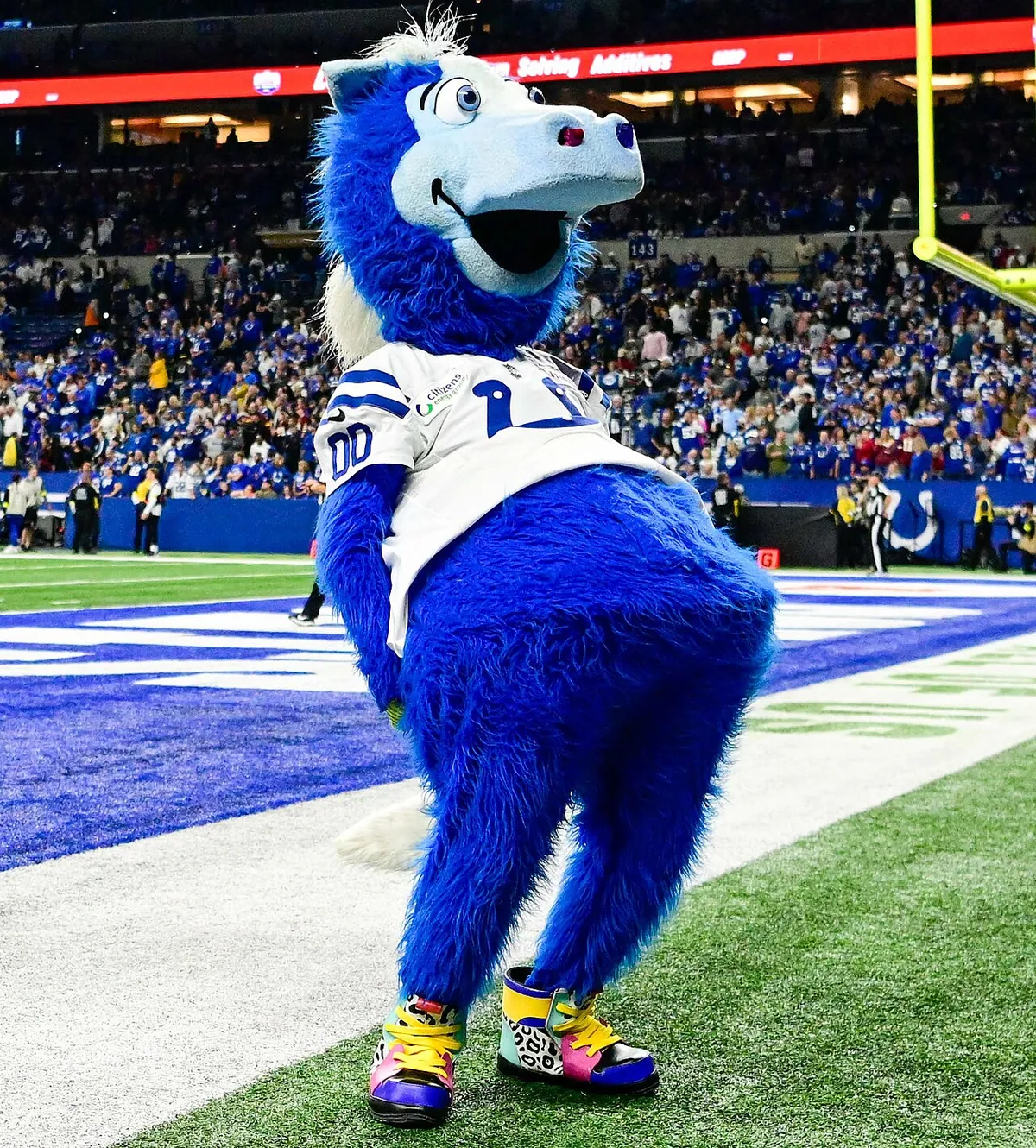
The Denver Broncos employ both Miles, a white anthropomorphic horse in an orange jersey, and Thunder II, a live Arabian horse. The Houston Texans mascot is Toro, a dark blue bull, and the Indianapolis Colts have Blue, a blue horse-like figure. Jacksonville is represented by Jaxson de Ville, a jaguar figure known for stunts, and Kansas City by K.C. Wolf, a grey wolf. The Las Vegas Raiders have Raider Rusher, a caricature of a football player with a spiked helmet, while the Los Angeles Chargers do not have an official mascot. The Miami Dolphins mascot is T.D., a dolphin figure, and the New England Patriots have Pat Patriot, a caricature of a revolutionary soldier.
| Team | Description |
|---|---|
| Green Bay Packers | No official mascot |
| Los Angeles Chargers | No official mascot |
| New York Giants | No official mascot |
| New York Jets | No official mascot |
The Pittsburgh Steelers mascot is Steely McBeam, a burly steelworker designed to reflect the team's industrial heritage and its pre-Steelmark logo from the 1950s. The Tennessee Titans have T-Rac, a raccoon that is the state animal of Tennessee, often seen riding a chariot onto the field. The Washington Commanders feature Major Tuddy, a pig mascot that pays homage to the famed Hogs offensive line from the 1980s. The Seattle Seahawks have three mascots: Blitz and Boom, which are large blue anthropomorphic birds, and Taima, a live augur hawk that performs at games.
Teams Without Official Mascots
Four NFL franchises operate without an official mascot character. The Green Bay Packers, one of the league's oldest franchises, have never adopted a mascot, relying instead on their history and fan traditions. The New York Giants and the New York Jets, both based in the New York metropolitan area, also do not have mascots, a decision that aligns with a presentation focused on the football product itself. The Los Angeles Chargers are the fourth team without a mascot, though they previously had a character named Bolt Man when the team was located in San Diego. The Chargers introduced Bolt Man as their mascot for the 1996-97 season in a game where they beat the Seattle Seahawks 29-7. Despite this history, the current Los Angeles Chargers organization does not list an official mascot. The absence of a mascot for these teams does not reduce fan engagement, as each franchise has developed other strong game-day traditions and identities that connect with their supporters.
Types and Symbolism of Mascots
NFL mascots can be broadly categorized by the type of symbol they represent, with the majority falling into animal or human character designs. An analysis of the 32 teams shows that 16 use animals as their primary mascot symbolism, while 14 use people or human-like caricatures. The remaining teams are those without an official mascot. This breakdown highlights how teams choose imagery that connects to their nickname, local culture, or historical identity. Animal mascots are prevalent, with specific subgroups like birds being particularly common.
Bird mascots are represented by five NFL teams, making them a significant category within the animal mascot group. These include the Arizona Cardinals (Big Red), Atlanta Falcons (Freddie Falcon), Baltimore Ravens (Edgar, Allen, and Poe), Philadelphia Eagles (Swoop), and Seattle Seahawks (Blitz and Boom). Other animal categories include four cat mascots (Bengals, Jaguars, Lions, Panthers), two horse mascots (Broncos, Colts), and single representatives like a ram (Rams), a wolf (Chiefs), a dolphin (Dolphins), and a raccoon (Titans). Human mascots often represent professions, historical figures, or mythological concepts, such as steelworkers, patriots, pirates, Vikings, and gold prospectors.
- Animal Mascots (16 teams): Ravens, Bills, Bengals, Bears, Lions, Panthers, Jaguars, Chiefs, Dolphins, Colts, Rams, Cardinals, Falcons, Eagles, Seahawks, Titans.
- Human/Caricature Mascots (14 teams): Patriots, Steelers, Raiders, Buccaneers, 49ers, Vikings, Cowboys, Commanders, Saints, Broncos (Miles), Browns (Chomps), Texans (Toro), Chargers (historically Bolt Man).
- Bird Mascots (5 teams): Cardinals, Falcons, Ravens, Eagles, Seahawks.
- Live Animal Mascots (2 teams): Denver Broncos (Thunder II horse), Seattle Seahawks (Taima hawk).
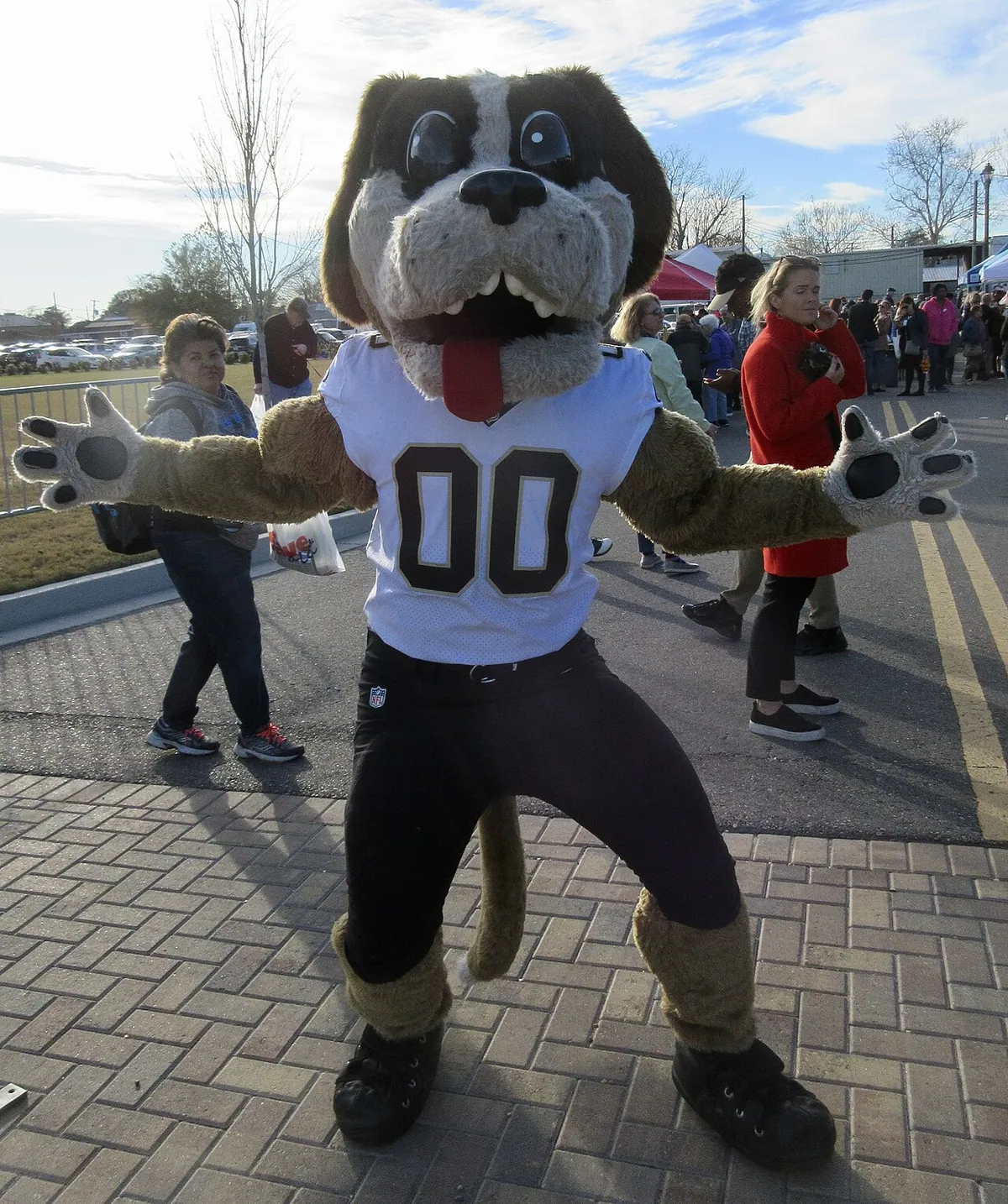
The symbolism often ties directly to team names, such as the Indianapolis Colts' horse mascot Blue or the Jacksonville Jaguars' Jaxson de Ville. Other mascots draw on local culture, like the San Francisco 49ers' Sourdough Sam, inspired by the California Gold Rush prospectors. Some mascots reference specific team history, like the Washington Commanders' Major Tuddy, who honors the Hogs offensive line, or the Chicago Bears' Staley Da Bear, named for team founder A.E. Staley. This connection to local identity and history helps strengthen the bond between the team and its community.
Rules and Regulations for Mascots
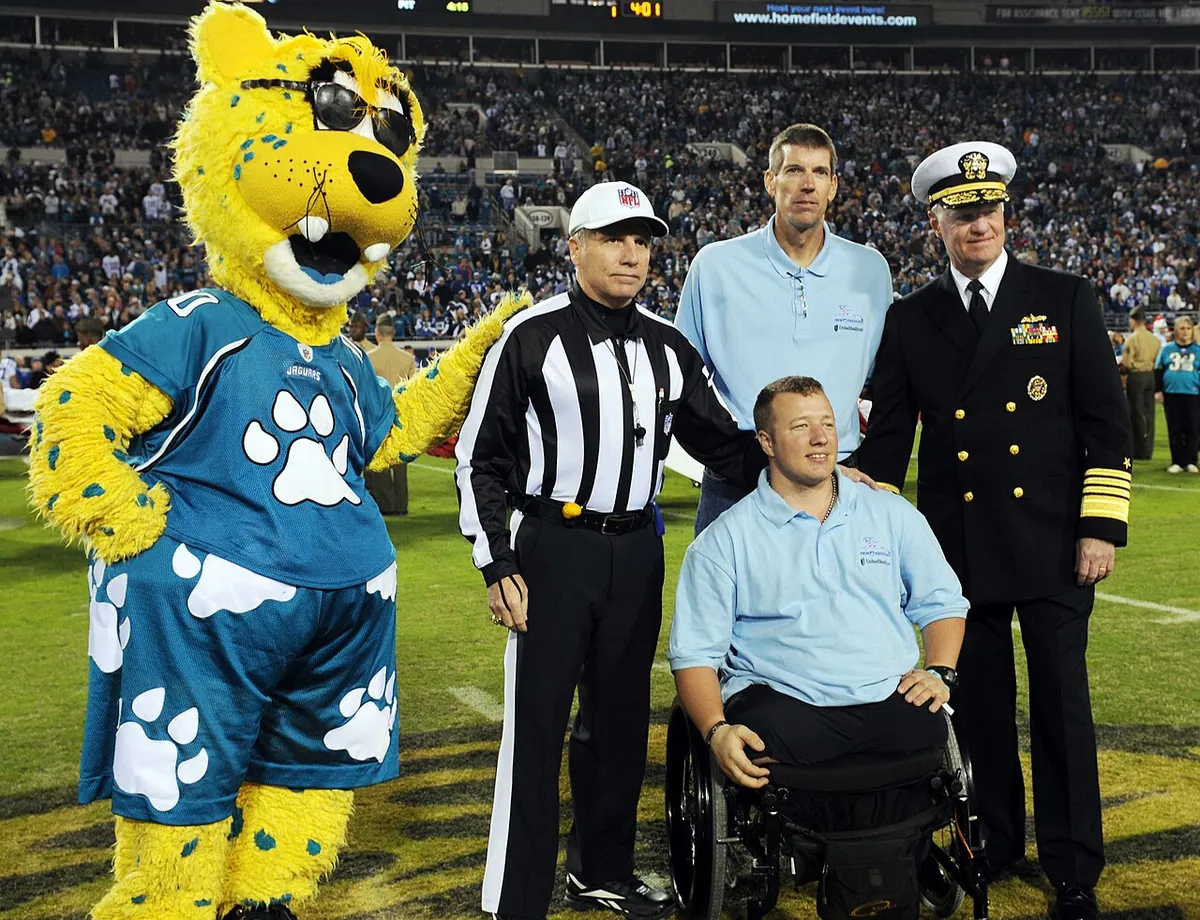
The NFL has established specific rules governing mascot conduct during games to ensure safety and sportsmanship. A key league rule prohibits mascots from coming within six feet of the field of play or from taunting the opposing team during games. This regulation helps maintain the competitive integrity of the event and prevents mascots from becoming a distraction or an unfair psychological advantage. These rules were notably influenced by the antics of certain mascots, leading to a formal policy change in 1998. The change was partly prompted by the high-flying stunts of Jacksonville's Jaxson de Ville.
Mascot performers must adhere to strict appearance guidelines set by both the league and their individual teams. For example, the Baltimore Ravens' mascot appearance guidelines mandate that a 15-minute break must be scheduled as part of every one hour performed. The guidelines also require event organizers to provide water bottles or access to water for the mascot performer on site. These provisions address the physical demands of performing in often heavy, non-breathable costumes for extended periods in various weather conditions. Mascots are expected to maintain high energy and a consistent personality throughout their appearances.
Performers must know how to interact appropriately with all people, from young children to adults, while staying in character. They are not allowed to speak while in costume to preserve the magical illusion of the character. The NFL's operations manual also contains uniform and appearance rules for all personnel, which indirectly affect mascot costume standards. While the rules for mascots are less detailed than those for players, they create a framework that allows for entertaining fan engagement without compromising the professional atmosphere of an NFL game. Teams are responsible for ensuring their mascot performers understand and follow these league-wide and team-specific protocols.
Historical Development and Notable Mascots
The use of mascots in the NFL has evolved over time, with many characters being introduced or redesigned in recent decades. The San Diego Chargers introduced their Bolt Man mascot for the 1996-97 season, a period when several teams were formalizing their mascot programs. The San Francisco 49ers' Sourdough Sam has a longer history, with photos showing the character holding an Olympic torch during a game in 1988. Some mascots, like the Minnesota Vikings' Viktor, replaced previous mascots. The Vikings formerly had a human mascot named Ragnar, who was one of two 'human' mascots in professional North American sports not in an animal or caricature costume, alongside the Boston Celtics' Lucky the Leprechaun.
Ragnar, dressed as a Viking, did not renew his contract in 2015, leading to the current Viktor mascot. The New England Patriots' Pat Patriot is based on the nickname of the team's original logo, providing a direct link to the franchise's visual history. The Pittsburgh Steelers' Steely McBeam is based on the team's pre-Steelmark logo from the 1950s and early 1960s, featuring a burly steelworker with a jawline reminiscent of former coach Bill Cowher. These changes show how mascots are updated to reflect contemporary branding while sometimes retaining historical elements. The Houston Oilers, a former NFL team, had a mascot named The Roughneck.
Notable mascot moments have become part of team lore. The Tennessee Titans' T-Rac has been lowered onto the field as part of pre-game activities and has ridden a chariot ahead of players running onto the field. Billy Buffalo leads the Buffalo Bills onto the field prior to games, as seen in a 2008 preseason event. During halftime of a 2007 game, a team of various NFL mascots played a football game against members of the Denver Boys and Girls Club at Invesco Field. The Jacksonville Jaguars' Jaxson de Ville is well-known for crazy stunts and antics that contributed to the NFL changing its mascot rules in 1998. These characters have become integral to the game-day experience beyond mere sideline presence.
Public Perception and Rankings
NFL mascots are frequently ranked and reviewed by media outlets and fans, leading to a wide range of opinions on their design, creepiness, and entertainment value. Sports Illustrated published a ranking of all 28 NFL mascots, listing them from the least to most favored. In that ranking, the Las Vegas Raiders' Raider Rusher was placed last at number 28, described as a big head with no torso but with arms and legs, wearing a mask. The Miami Dolphins' T.D. was ranked 27th, criticized for having the wide-eyed look of something that finally snapped. The Carolina Panthers' Sir Purr was 26th, with the ranking questioning the character's claimed diet of birds like falcons and eagles.
The Dallas Cowboys' Rowdy was ranked 25th, called wholesome but creepy. Other notable placements included the Kansas City Chiefs' K.C. Wolf at 23rd, called the Randy Quaid of NFL mascots, and the San Francisco 49ers' Sourdough Sam at 22nd. The Baltimore Ravens' Poe was ranked 20th, with comments about his soulless eyes. The Jacksonville Jaguars' Jaxson de Ville was placed at 14th, acknowledged for his stunts despite a dorky appearance. These subjective rankings highlight how mascot design does not always universally appeal to adults, even if the characters are popular with children. Different publications often create their own lists, leading to varied results based on the criteria used, such as humor, brand alignment, or perceived fear factor.
Some mascots have been described in terms of their perceived creepiness. An article from The A.V. Club ranked mascots by creepiness, noting that the Ravens' Poe inspires a strong feeling to regress to thumb-sucking. The Detroit Lions' mascot and the Cincinnati Bengals' mascot have also been subjects of such discussions. Despite these critiques, mascots remain valuable marketing tools and fan engagement assets. Their images are widely used on official merchandise, from neweracap.com selling team hats featuring mascots to countless stock photos available on sites like Getty Images. Ultimately, a mascot's success is measured by its connection with the team's fanbase and its effectiveness in enhancing the game-day atmosphere, regardless of external rankings.
Mascot Roles and Appearances
NFL mascots have a wide range of responsibilities that extend far beyond simply appearing on the sideline during games. Their primary role is to serve as an ambassador for the team, engaging with fans of all ages to build excitement and community spirit. This involves posing for photos, signing autographs with a characteristic mascot signature, and leading cheers throughout the stadium. Mascots are involved in pre-game festivities, often leading the team out of the tunnel onto the field, as Jaxson de Ville does for the Jacksonville Jaguars and Billy Buffalo does for the Buffalo Bills. They also participate in elaborate halftime shows and on-field skits designed to entertain the crowd during breaks in the action.
Mascots make numerous appearances outside of game days, representing the team at community events, charity functions, school visits, and corporate partnerships. The New England Patriots' Pat Patriot was photographed celebrating with fans during a 2007 AFC Wild Card playoff game victory. The Tennessee Titans' T-Rac has been seen in a Christmas tree costume during a December game, demonstrating how mascots adapt to seasonal themes. These appearances are carefully scheduled, with guidelines ensuring performer welfare, such as mandated break times. The mascot's role is physically demanding, requiring performers to maintain high energy and a consistent character personality while interacting with the public, often in a cumbersome costume under potentially hot stadium conditions.
While most mascot activity occurs at home games, some mascots do travel to select away games, particularly for significant rivalry matches or nationally televised events. However, travel is not standard for all mascots due to the associated costs and logistics. The performance is highly choreographed and regulated, with specific rules against field incursions and taunting. Mascots also feature prominently in team marketing and merchandise, with their likenesses appearing on clothing, toys, and promotional materials. This commercial use indicates their value as a recognizable brand symbol. The combination of community engagement, in-game entertainment, and brand representation defines the mascot role within the NFL organization.
Video
FAQ
Which NFL teams do not have a mascot?
Four NFL teams do not have an official mascot. These teams are the Green Bay Packers, the New York Giants, the New York Jets, and the Los Angeles Chargers. The Chargers previously had a mascot named Bolt Man when the franchise was located in San Diego, but they do not list an official mascot in their current Los Angeles incarnation. The Packers, Giants, and Jets have historically operated without a mascot character, focusing on other traditions and fan engagement methods.
What was the NFL mascot rule change in 1998?
The NFL instituted a rule change regarding mascot conduct in 1998. This change was influenced by the antics of certain mascots, notably the Jacksonville Jaguars' Jaxson de Ville and his high-risk stunts. The new regulations included prohibiting mascots from coming within six feet of the field of play during games. The rules also forbid mascots from taunting the opposing team, ensuring that mascot activities remain entertaining without disrupting the competitive integrity of the game or posing a safety risk.
How many NFL mascots are birds?
Five NFL teams have bird mascots. These are the Arizona Cardinals with Big Red, a red cardinal. The Atlanta Falcons with Freddie Falcon. The Baltimore Ravens with Edgar, Allen, and Poe. The Philadelphia Eagles with Swoop and Air Swoop. And the Seattle Seahawks with Blitz, Boom, and Taima. The Seahawks also have a live augur hawk named Taima. This makes bird mascots one of the most common types within the animal mascot category, reflecting the popularity of bird names in NFL team identities.
Do NFL mascots travel to away games?
NFL mascots primarily perform at their team's home games. Travel to away games is not a standard practice for most mascots due to the significant costs, logistics, and scheduling involved. However, some mascots may make special appearances at select away games, particularly for high-profile rivalry matches, playoff games, or nationally televised events. The decision to travel is made on a case-by-case basis by each individual team based on their marketing strategy, budget, and the specific event's significance.
What are the creepiest NFL mascots according to rankings?
Various media rankings often cite certain mascots as being creepy or unsettling. Sports Illustrated's ranking placed Raider Rusher of the Las Vegas Raiders last, describing him as a big head with a mask. The Dallas Cowboys' Rowdy was noted for a creepy wholesomeness. The A.V. Club specifically mentioned the Baltimore Ravens' Poe as inspiring a desire to regress to thumb-sucking. These subjective critiques often focus on mascots with exaggerated features, intense stares, or unconventional designs that may unsettle some adult viewers, even if children find them entertaining.
Why do sports teams have mascots?
Sports teams have mascots to serve as a symbolic figure that represents team pride, brings good luck, and enhances fan engagement. Mascots act as a bridge between the team and its community, especially for younger fans. They provide entertainment during games through skits and interactions, becoming a recognizable brand symbol used in merchandise. Historically, mascots stem from traditions of adopting animals or characters as lucky charms. In the modern NFL, they are a key part of the game-day experience, contributing to the atmosphere and creating memorable moments for attendees.
Sources
- List of NFL mascots (Wikipedia) Wikipedia
- Mascots: Old and New NFL
- Ranking the NFL's Mascots Sports Illustrated