In the National Football League, training camp refers to the preseason period before the regular season commences. It is a time when teams congregate at a specific location to conduct practices, evaluate players, and install playbooks. Training camp serves to acclimate new players and coaches, allow veterans to return to form, and serves as the primary evaluation period for younger players competing for roster spots. The process culminates with teams reducing their rosters from 90 players to the final 53-man regular season roster. Training camps are a foundational part of the NFL calendar, blending physical preparation with strategic installation.
Purpose and Key Components of Training Camp
NFL training camp serves multiple critical functions for a football team preparing for the grueling season ahead. New players and coaches use this time to acclimate themselves to new teammates, systems, and terminology. For younger players and those on the roster bubble, camp serves as an extended evaluation period where jobs are won or lost based on performance. Veterans utilize the time to sharpen their skills and return to playing form after the offseason. The camp period is also when teams begin installing their offensive and defensive playbooks in earnest, often breaking the installation into 10 to 14 dedicated days. The primary on-field components of training camp include scrimmages, which are pseudo-games where teams run nearly full games' worth of plays, various position-specific drills, team meetings, weight training, and eventually, preseason exhibition games. The exhibition season follows the latter part of camp, giving teams live game film to assess their players.
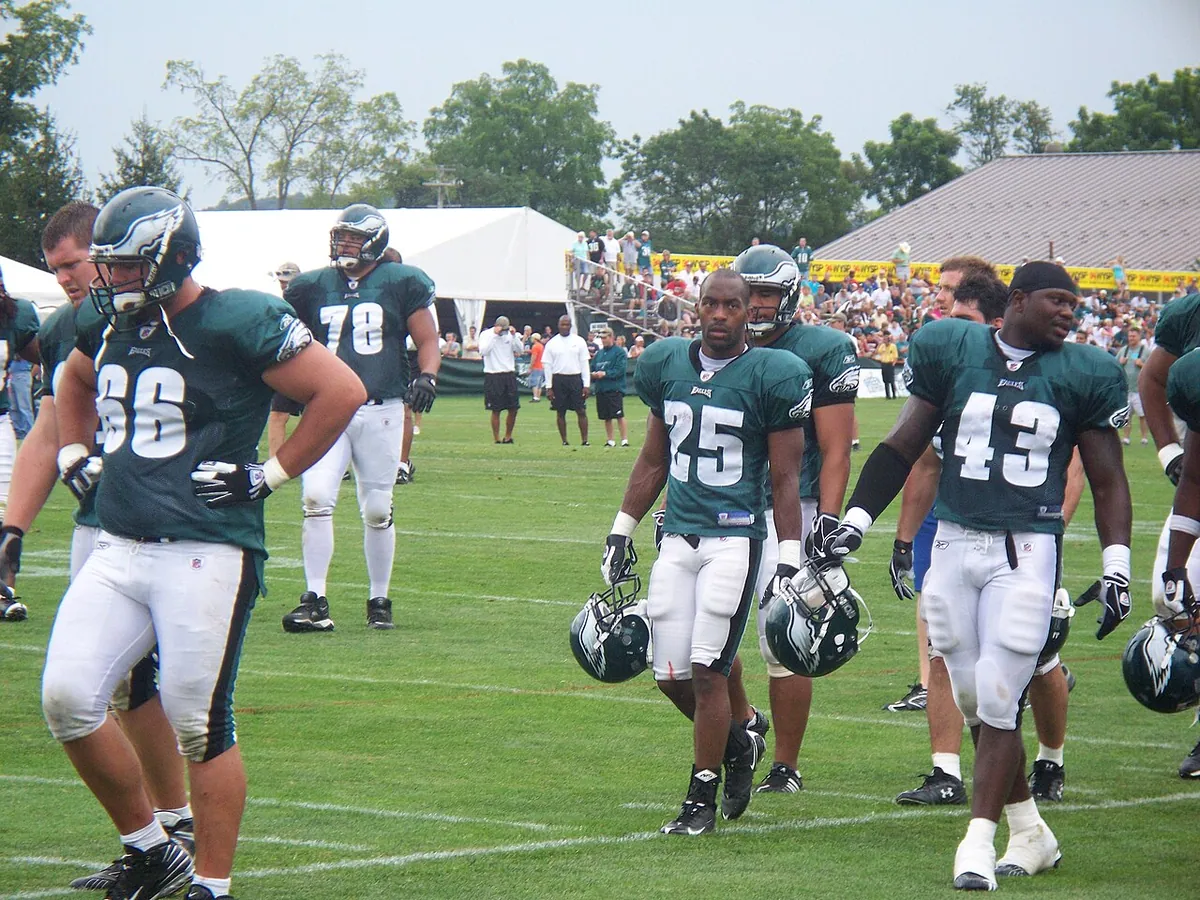
Behind the scenes, a vast apparatus of scouts, coaches, video analysts, and data specialists collects information on every player. Evaluators study physical ability, knowledge of the system, consistency, position versatility, and special-teams value. The final 53-man roster is not simply a collection of the most individually talented players but must function as a complete team, which makes these evaluations complex. Attendance at training camp is mandatory for all players under contract, and those who fail to report are subject to fines, which often becomes a topic of public discussion during contract disputes. Fans are frequently able to attend practices, which are often free or substantially less expensive than game tickets, making camps a popular destination for families and dedicated supporters.
Roster Rules and the Cutdown Process
NFL teams operate with an expanded roster of up to 90 players throughout the training camp period. This group is composed of seasoned veterans, rookies selected in the draft, players who were not drafted, and individuals attempting to continue their professional careers. The collective bargaining agreement between the league and the NFL Players Association governs the schedule and contact rules during this time. The central drama of camp revolves around the cutdown process, where teams must pare this large group down to the final 53-player active roster for the regular season. In 2026, the deadline for this initial cutdown is set for Sunday, August 30 at 6 p.m. ET. Teams also maintain a practice squad, which consisted of 16 players in 2026, with an additional place available under the International Player Pathway rules.
The evaluation for these final spots is detailed and considers many factors. Teams must consider not only raw talent but how a player fits within the team's specific schemes and needs. A player's ability to contribute on special teams is often the deciding factor for the last few roster spots, especially for young reserves. Consistency in performance from practice to practice is valued more highly than a single impressive highlight. Furthermore, position versatility is a major asset, as a player who can competently fill multiple roles provides crucial flexibility for coaches managing a limited roster. The process ensures that by the end of camp, the team transitioning into the preseason games has a much clearer picture of its depth chart and which players are most likely to contribute during the regular season.
Training Camp Locations and the Shift to Home Facilities
NFL teams hold their training camps at various locations across the United States, a key difference from Major League Baseball's centralized spring training in Arizona and Florida. Traditionally, many teams used remote locations, often college campuses, to isolate the team and build camaraderie. However, a significant trend has seen teams moving their camps back to their year-round headquarters and practice facilities. By 2025, as many as 26 clubs are projected to hold camp at their year-round headquarters and practice facilities, a dramatic increase from only five teams doing so in 2000. This shift is driven by practicality and the advanced amenities available at modern team complexes. These state-of-the-art facilities offer multiple practice fields, indoor spaces, extensive medical and rehabilitation centers, meeting rooms, and cafeterias that distant college campuses cannot match.
Many of these newer headquarters were explicitly designed with hosting training camp in mind, including permanent bleachers for spectators. The substantial cost of temporarily relocating the entire organization, including players, coaches, and support staff, to a remote site is another factor in the move home. Changes in the collective bargaining agreement have also influenced this trend, as rules now limit contact and prohibit multiple padded practices in a day, reducing the need for a secluded "boot camp" atmosphere. With players maintaining fitness year-round through OTAs and minicamps, the focus of camp has evolved more toward installation, evaluation, and preparation rather than simply getting players into shape. A handful of teams still use somewhat distant locations to engage with broader segments of their fan base, such as the Buffalo Bills holding camp at St. John Fisher University in suburban Rochester to connect with upstate New York.
- Pittsburgh Steelers: Saint Vincent College, Latrobe, Pennsylvania (since 1966).
- Kansas City Chiefs: Missouri Western State University, St. Joseph, Missouri (since 2010).
- Dallas Cowboys: River Ridge Playing Fields, Oxnard, California (periodically since 2004).
- Indianapolis Colts: Grand Park, Westfield, Indiana (since 2018).
- Los Angeles Rams: Loyola Marymount University, Los Angeles, California (as of 2024).
- Carolina Panthers: Bank of America Stadium, Charlotte, North Carolina (as of 2024).
Safety Protocols and Health Considerations
With NFL training camps typically starting in late July, heat and hydration are paramount concerns. The tragic death of Minnesota Vikings offensive tackle Korey Stringer in 2001 from heatstroke prompted a league-wide overhaul of training camp safety policies. As a result, the NFL now mandates that every team must have its team doctor and trainers on the field for every practice. Furthermore, an ambulance must be present on-site during all practice sessions to ensure immediate emergency response. These rules are strictly enforced to protect players during the intense physical exertion in often high temperatures and humidity. Severe weather, including lightning storms, also poses a risk and has caused the cancellation or delay of practices and preseason games, such as a Cleveland Browns exhibition game ended early due to lightning in 2002.
Incidents during camp continue to highlight these dangers, as seen in 2026 when a New York Jets cornerback was taken to a hospital after briefly losing consciousness at a practice. The league's health and safety protocols extend beyond immediate emergency care to include acclimatization periods, regulated work-to-rest ratios, and extensive monitoring of player hydration. The shift away from the old "two-a-days" practice model, two full practice sessions in a single day, under the current CBA has also been a significant step in reducing physical strain and heat-related risks. These collective measures represent the league's ongoing effort to balance the necessary physical preparation for football with the well-being of its players.
The Installation Process and Daily Schedule
The core football work of training camp revolves around the systematic installation of the team's playbook. Most offensive and defensive systems are broken down into 10 to 14 install days, where coaches introduce layers of concepts to the players. The process typically begins with core fundamental plays, with complexity added each subsequent day. For example, an offensive install might start with basic outside and inside zone running schemes on day one, then add play-action passes, bootlegs, and specific route combinations tied to those runs in the following days. Teams generally follow one of two scheduling patterns for this installation. Some teams hold install meetings in the morning, practice those concepts on the field in the afternoon, and review film in the evening. Other teams prefer to hold install meetings in the evening, have players study overnight, practice the concepts first thing the next morning, and then review film in the afternoon.
The daily grind of camp is rigorous and structured. Days begin early with meetings and walk-throughs to review assignments. The main on-field practices, often in full pads, involve running drills, executing plays against live resistance, and participating in controlled scrimmages. This is the first opportunity for teams to conduct full-contact practices since the previous season. After practice, players engage in additional meetings, film study, and treatment. The schedule is designed to maximize learning and evaluation while conditioning players for the physical demands of the season. This regimented process ensures that by the time preseason games arrive, players have a working knowledge of the entire system and can execute their assignments under game-like conditions.
Joint Practices and Preseason Integration
A common feature of modern NFL training camps is the joint practice, where two teams schedule a series of practices together at a neutral site or one team's facility. These sessions provide valuable opportunities for players to compete against unfamiliar opponents in a controlled setting, offering a different look than facing teammates daily. For example, in the 2026 camp schedule, the Baltimore Ravens held joint practices with the Minnesota Vikings on August 19 and 20, and with the Washington Commanders on August 26. Joint practices are often scheduled in the week leading up to a preseason game between the two teams, allowing coaches to work on specific situations and evaluate players against different schemes. These practices have largely replaced traditional intra-squad scrimmages, which are less common in contemporary camps.
Training camp schedules are built around a team's preseason game slate. The exhibition games serve as the ultimate evaluation tool, providing live game film against another opponent. Camp practices after a preseason game often focus on correcting mistakes identified on film. The 2026 preseason schedules showed this integration, with teams like the Arizona Cardinals having practices interspersed between games against the Panthers, Raiders, Cowboys, and Packers. The final weeks of camp are dedicated to preparing for the regular season opener, with the roster nearly set and the focus shifting from evaluation to refinement and game planning. The entire training camp period, from the first install meeting to the final preseason game, is a carefully orchestrated progression designed to build a team ready for Week 1.
Evolution and Cultural Impact
The nature of NFL training camp has evolved significantly over the decades, influenced by changes in the collective bargaining agreement, advances in sports science, and shifting team philosophies. The old model of a grueling, isolated "boot camp" aimed at getting players into shape has given way to a more strategic and efficient process. The prohibition of multiple padded practices in a day, known as "two-a-days," and limits on contact have altered the physical toll of camp. With players now participating in organized team activities and minicamps throughout the offseason, they arrive at training camp in much better physical condition, allowing coaches to focus immediately on scheme installation and evaluation rather than pure conditioning. This evolution has been a key driver in the trend of teams holding camp at their home facilities, as the need for a spartan, remote location has diminished.
Training camp holds a significant place in NFL culture and media coverage. For fans, it represents the end of the long offseason and the first chance to see new players and coaches in action. Many teams open numerous practices to the public for free or at low cost, creating a family-friendly event with concessions and activities. For the media, camp is a prime source of storylines about position battles, standout rookies, and team chemistry. The HBO documentary series Hard Knocks has chronicled the training camp experience for select teams since 2001, providing an unprecedented behind-the-scenes look at the cuts, conflicts, and camaraderie that define the period. These storylines dominate sports coverage each summer, as seen in 2026 with headlines about rookie receivers turning heads, quarterback competitions, and players returning from injury, all feeding the optimism and anticipation for the coming season.
2026 Training Camp Highlights and Storylines
The 2026 NFL training camp period featured numerous storylines that captured the attention of fans and analysts. Across the league, new coaches and coordinators were installing schemes, while established teams worked to integrate new talent. In the AFC North, storylines focused on new coaches and whether teams like the Baltimore Ravens and Cincinnati Bengals could bounce back from previous seasons. The NFC East narrative involved new faces and schemes, with the health of the New York Giants' roster noted as a key factor. Specific team developments included the Miami Dolphins' rookie wide receiver turning heads in camp, while the Vikings named their starting quarterback for Week 1. The Chargers' offensive coordinator indicated a "hot hand" approach to the running back group, and the Jets dealt with an injury scare when a cornerback was taken to the hospital after losing consciousness at practice.
The 2026 camp schedules showed teams reporting throughout late July, with veterans for most clubs arriving by July 28. The Arizona Cardinals' veterans reported on July 24, while the Atlanta Falcons' main group reported on July 31. Joint practices were a major part of the calendar, with the Green Bay Packers hosting the Cardinals for a joint session on August 26, and the Houston Texans practicing with the Las Vegas Raiders on August 18. These sessions provided crucial evaluation opportunities ahead of the preseason games. The integration of camp with the preseason was evident, as teams like the Detroit Lions had practices scheduled around games against the Bengals, Commanders, and Colts. The overarching theme of every camp remained the same: the optimistic yet rigorous process of building a team capable of competing in the regular season.
Video
FAQ
When does NFL training camp start?
NFL training camps typically begin in late July. For the 2026 season, all 32 clubs were scheduled to have begun camp by July 28. Specific report dates vary by team, with veterans for the Arizona Cardinals reporting as early as July 24, while the Atlanta Falcons' veterans reported on July 31. Rookies are often required to report a few days earlier than veterans for orientation and initial conditioning. The start of camp marks the end of the NFL's offseason program and the beginning of full-team, padded practices in preparation for the preseason.
How long is an NFL training camp?
An NFL training camp generally lasts for three to four weeks, running from late July through most of August. The exact duration can vary slightly by team based on their preseason game schedule and specific planning. The camp period encompasses all practices, scrimmages, and meetings leading up to and interspersed between a team's preseason exhibition games. It concludes with the mandatory roster reduction from 90 players to the final 53-man regular season roster, which for the 2026 season is set for August 30.
What is the difference between OTAs and training camp?
Organized Team Activities (OTAs) are voluntary offseason workouts held in late May and early June, focusing on conditioning, non-contact drills, and initial playbook installation. Training camp is the mandatory preseason period starting in late July, featuring full-contact practices in pads, intense roster evaluation, and integrated preseason games. OTAs have strict limits on contact and are more instructional, while training camp is designed to simulate the physical and mental demands of the regular season. OTAs serve as a precursor, helping players arrive at camp in good condition and with a base understanding of the system.
Can fans attend NFL training camp?
Yes, fans are often able to attend their favorite team's training camp practices. Many teams open numerous practices to the public, frequently offering free admission or charging a nominal fee that is substantially less than a regular game ticket. Teams often enhance the fan experience by selling souvenirs and concessions and offering activities for children. This makes training camp trips a popular and affordable option for families and fans who may not be able to attend regular season games. The specific open practice schedule is released by each team ahead of camp.
Why did teams stop doing "two-a-days" at training camp?
The practice of holding two full-contact practice sessions in a single day, known as "two-a-days," was effectively prohibited by the NFL's collective bargaining agreement with the players' union. The change was driven by player safety concerns, aiming to reduce the risk of injury and heat-related illness during the intense summer practices. The death of Minnesota Vikings lineman Korey Stringer in 2001 from heatstroke was a critical event that increased focus on camp safety. Modern training philosophies also recognize that with year-round conditioning through OTAs and minicamps, players arrive in better shape, reducing the need for an exhaustive "boot camp" style of conditioning.
What happened to Korey Stringer during NFL training camp in 2001?
Minnesota Vikings player Korey Stringer died in 2001 from a medical condition stemming from dehydration and heatstroke during training camp. This tragic event prompted the NFL to implement significant safety policy changes. The league now mandates that every team must have its team doctor and trainers on the field during all practices, and an ambulance must be present. These rules were established to help prevent similar heat-related tragedies in the future.
Sources
- Training camp (NFL) (Wikipedia) Wikipedia
- Training Camp NFL
- NFL training camp schedules 2026: Report dates, locations, joint practices, preseason games and more for all 32 teams Yahoo Sports
- Inside NFL Training Camp: How Teams Decide Who Makes the 53-Man Roster sportsmanagementworldwide.com
- How NFL Training Camp Installs Work, Bullock's Film Room markbullock.substack.com
- NFL training camp: What it is, why it is so important, key dates and locations dazn.com