The largest American football stadium by seating capacity is Michigan Stadium in Ann Arbor, Michigan, home to the Michigan Wolverines, with a capacity of 107,601. The top ten largest stadiums are all college football venues, led by Michigan Stadium, Beaver Stadium (106,304), Ohio Stadium (102,780), Kyle Field (102,733), and Tiger Stadium (102,321). Professional NFL stadiums have smaller capacities, with the largest NFL venue, MetLife Stadium, holding 82,500 fans and ranking 15th overall. Stadium capacities are measured by permanent fixed seating for football configurations, though some can accommodate larger crowds with temporary seating or for other sports. The scale of these venues reflects the deep fan support in college football, particularly within conferences like the Big Ten and SEC, where weekly six-figure crowds are common.
Top 10 Largest College Football Stadiums
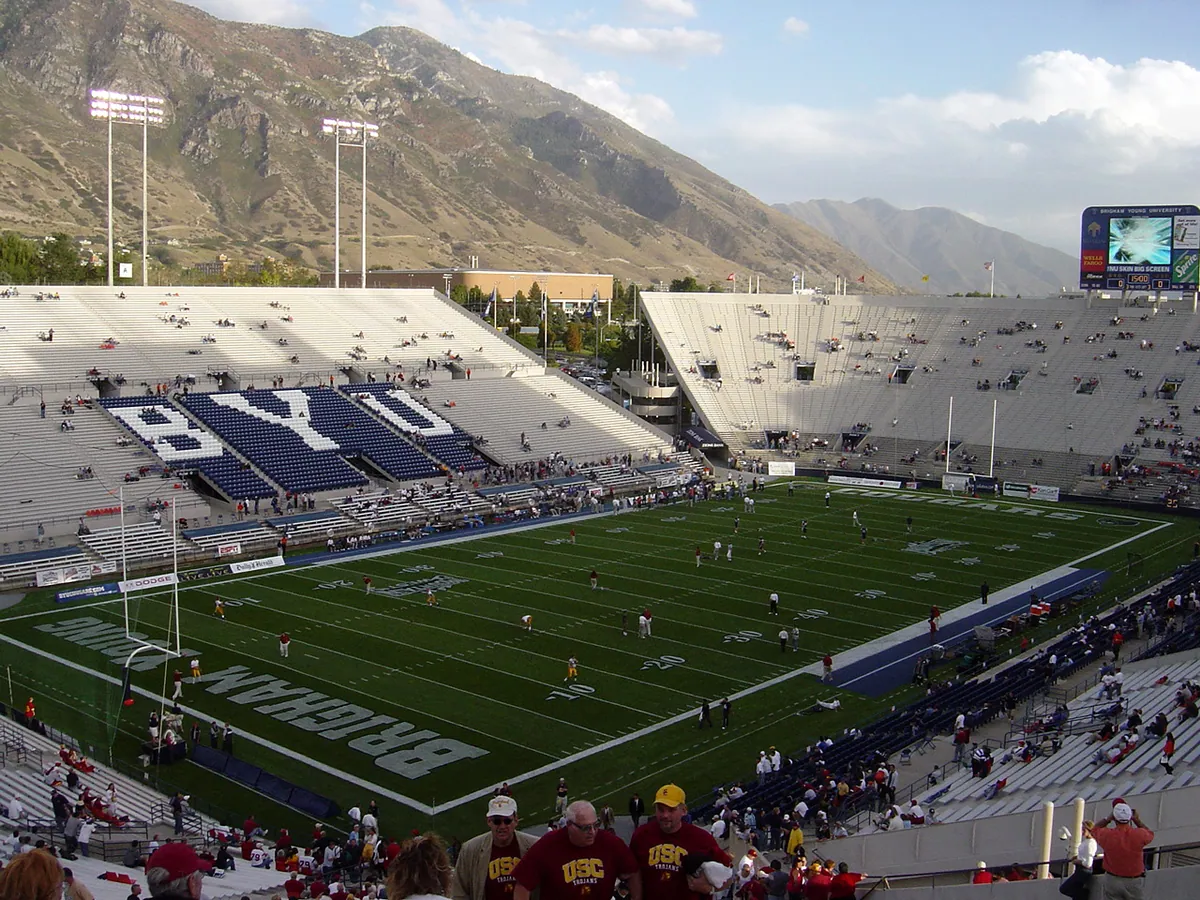
The ten largest stadiums in the United States are primarily homes to NCAA Division I FBS college football programs. These massive structures are primarily located in the Big Ten and Southeastern Conferences, reflecting the historic popularity and fan support in those regions. Michigan Stadium, known as The Big House, has held the top spot for decades with its official capacity of 107,601. Penn State's Beaver Stadium follows closely with 106,304 seats, famous for its White Out game atmosphere. Ohio State's Ohio Stadium, nicknamed The Horseshoe, has a capacity of 102,780 and is listed on the National Register of Historic Places.
Texas A&M's Kyle Field holds 102,733 fans and is central to the university's 12th Man tradition. Louisiana State University's Tiger Stadium, known as Death Valley, has a capacity of 102,321 and is renowned for its intense night game environment. The University of Tennessee's Neyland Stadium seats 101,915 and features orange and white checkerboard end zones. The University of Texas's Darrell K Royal, Texas Memorial Stadium in Austin has a capacity of 100,119. The University of Alabama's Bryant, Denny Stadium holds 100,077 fans. The University of Georgia's Sanford Stadium, known for games played Between the Hedges, has a capacity of 93,033. UCLA's home, the Rose Bowl, has a capacity of 89,702 for Bruins games, though it has held larger crowds for the annual Rose Bowl game.
Largest NFL Stadiums
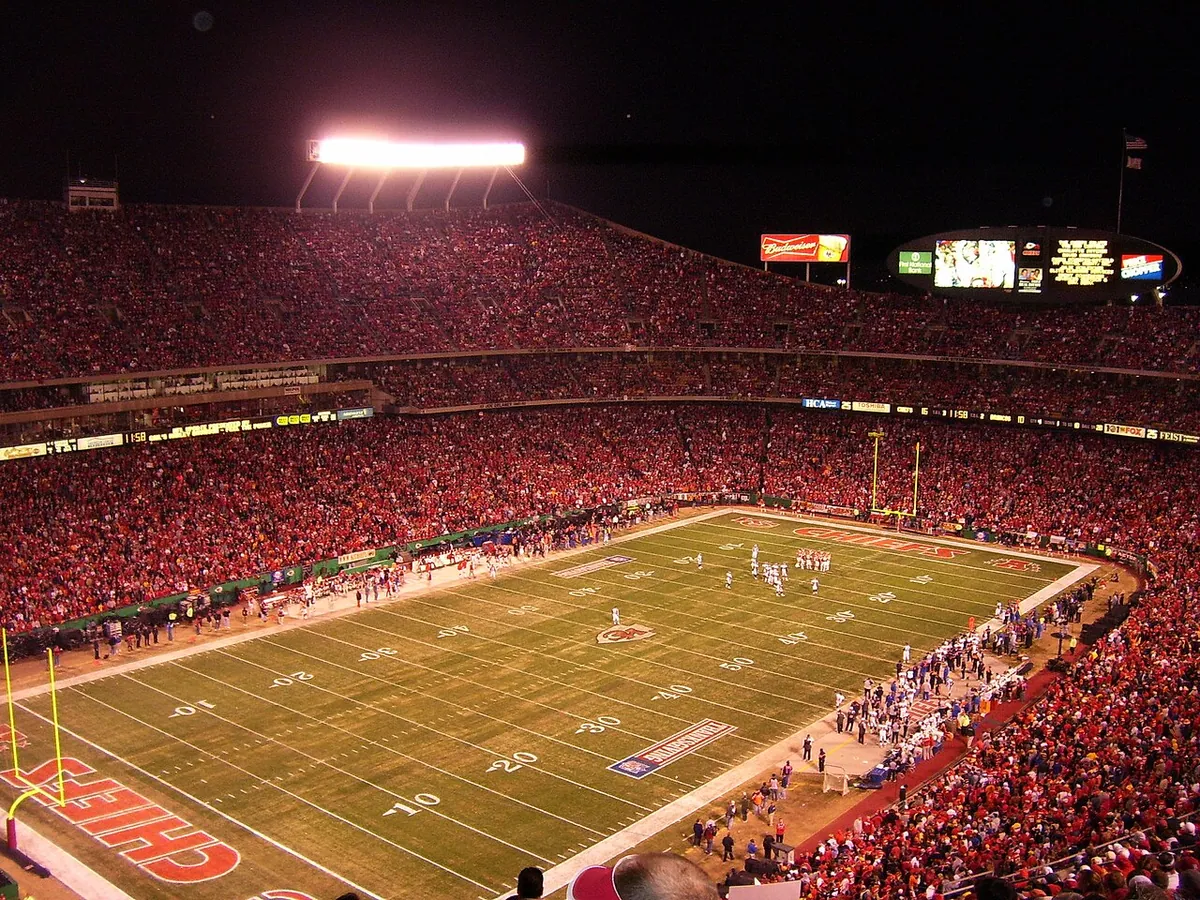
National Football League stadiums have significantly smaller capacities than the largest college venues, with the largest NFL stadium ranking 15th overall. The largest stadium used by a professional team is MetLife Stadium in East Rutherford, New Jersey, home to both the New York Giants and New York Jets, with a capacity of 82,500. Other large NFL venues include Lambeau Field in Green Bay (81,441), AT&T Stadium in Arlington, Texas (80,000), and Arrowhead Stadium in Kansas City (76,416). Empower Field at Mile High in Denver holds 76,125, while Bank of America Stadium in Charlotte has a capacity of 75,037.
The trend in modern NFL stadium construction favors premium amenities and corporate suites over maximum seating capacity, which explains the size disparity with college stadiums. Several NFL teams share stadiums with college programs, such as the Pittsburgh Steelers sharing Acrisure Stadium (68,400) with the University of Pittsburgh Panthers. The Tampa Bay Buccaneers share Raymond James Stadium (69,218) with the University of South Florida Bulls. The Tennessee Titans share Nissan Stadium (69,143) with Tennessee State University. These shared facilities often have capacities that place them in the middle of the overall rankings for American football stadiums.
Historic and Former Large Stadiums
Several large stadiums that have been closed or demolished once ranked among the nation's largest. Philadelphia's John F. Kennedy Stadium, closed in 1992, had a capacity of 100,000 and hosted the Philadelphia Eagles and the Army, Navy Game. The Cleveland Stadium, closed in 1996, held 81,000 fans for the Cleveland Browns. The Silverdome in Pontiac, Michigan, which closed in 2006, had a capacity of 80,311 and was home to the Detroit Lions. Giants Stadium in East Rutherford, New Jersey, closed in 2010, held 80,242 fans for the Giants and Jets. Other notable former large venues include the Miami Orange Bowl (74,476), Tampa Stadium (74,301), and the Georgia Dome in Atlanta (71,228). These stadiums were often replaced by newer facilities with different design philosophies, sometimes with slightly lower official capacities but enhanced fan experiences and revenue-generating features. The list of historic stadiums illustrates how venue size and design have evolved over the decades alongside the growth of the sport.
- John F. Kennedy Stadium: 100,000 capacity, closed 1992.
- Silverdome: 80,311 capacity, closed 2006.
- Giants Stadium: 80,242 capacity, closed 2010.
- Miami Orange Bowl: 74,476 capacity, closed 2008.
- Georgia Dome: 71,228 capacity, closed 2017.
Capacity Definitions and Attendance Records
Stadium capacity rankings are based on permanent fixed seating when the stadium is configured for American football. Some stadiums can accommodate larger crowds for other sports or by using temporary seating and standing-room areas. The official capacity number is a controlled figure used for planning and safety, but actual attendance can sometimes exceed it for special events. The modern record for a single college football game attendance is 156,990, set on September 10, 2016, at Bristol Motor Speedway for a neutral-site game between Tennessee and Virginia Tech.
Before that 2016 game, the modern attendance record was held by Michigan Stadium, which hosted 115,109 fans for a 2013 game against Notre Dame. The Rose Bowl stadium, with a UCLA home game capacity of 89,702, set an all-time attendance record of 106,869 for the 1973 Rose Bowl Game between USC and Ohio State. These record crowds demonstrate that temporary configurations and special events can push attendance far beyond listed capacities. The NCAA notes that crowds exceeding 100,000 have become commonplace in college football due to major renovations and expansion projects at the largest stadiums over the past several decades.
College Football Stadium Landscape
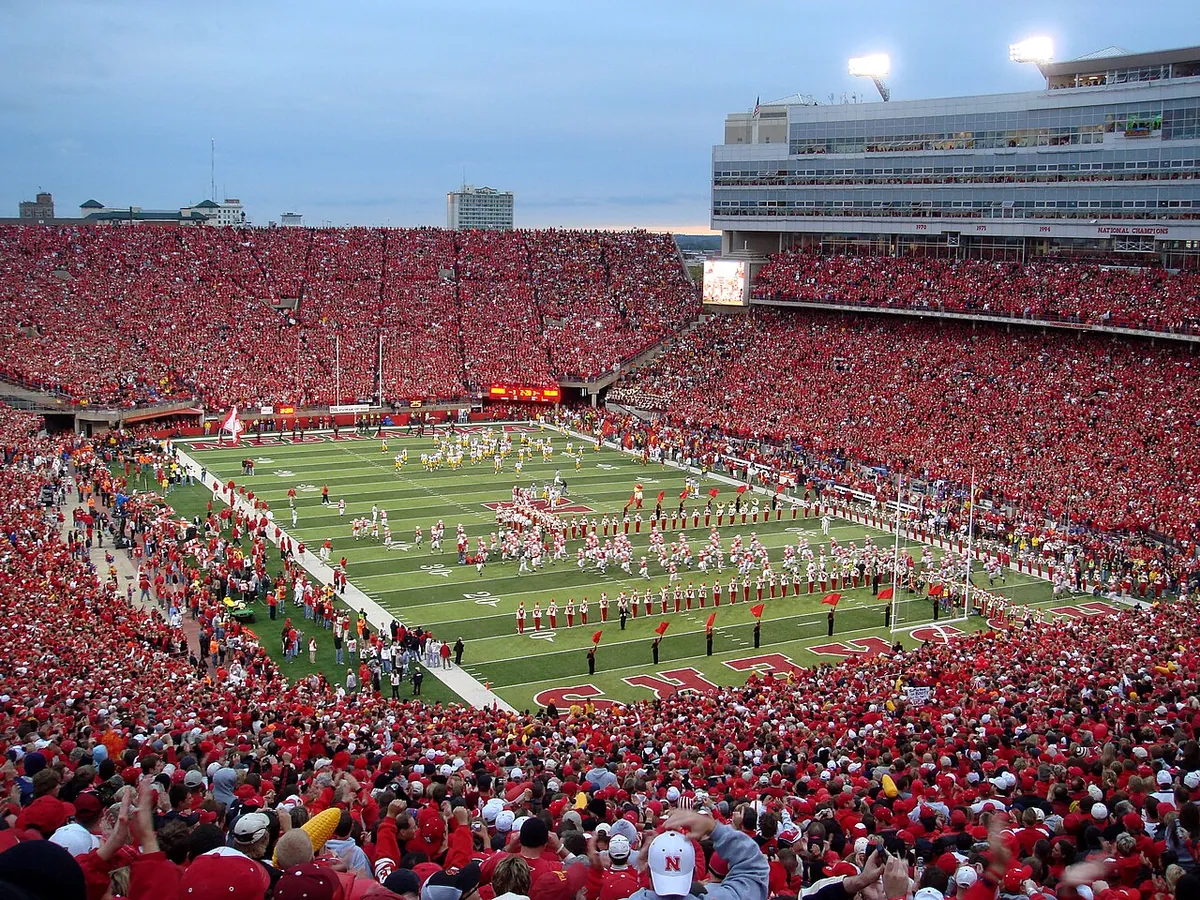
The concentration of the very largest stadiums is in the Big Ten and SEC conferences, which have long traditions of massive weekly attendance. Beyond the top ten, other major college stadiums include Ben Hill Griffin Stadium at Florida (88,548), Jordan-Hare Stadium at Auburn (88,043), Memorial Stadium at Nebraska (85,458), and Gaylord Family Oklahoma Memorial Stadium (80,126). Clemson Memorial Stadium holds 81,500, and Notre Dame Stadium has a capacity of 77,622. The scale of college stadiums is a direct result of the sport's deep integration with university identity and the ability to draw from large student and alumni bases. Many of these stadiums have undergone multiple expansions throughout their histories. Nebraska's Memorial Stadium, for example, has sold out every home game since 1962, an NCAA record streak of over 400 consecutive games. Stadiums like the Los Angeles Memorial Coliseum (77,500), Camp Randall Stadium in Wisconsin (76,057), and Spartan Stadium at Michigan State (74,866) also rank among the nation's largest and most historic venues, each with its own unique traditions and game-day atmosphere.
- Ben Hill Griffin Stadium (Florida): 88,548 capacity.
- Jordan-Hare Stadium (Auburn): 88,043 capacity.
- Memorial Stadium (Nebraska): 85,458 capacity.
- Gaylord Family Oklahoma Memorial Stadium: 80,126 capacity.
- Clemson Memorial Stadium: 81,500 capacity.
- Notre Dame Stadium: 77,622 capacity.
- Los Angeles Memorial Coliseum (USC): 77,500 capacity.
- Camp Randall Stadium (Wisconsin): 76,057 capacity.
Stadium Traditions and Notable Features
Many of the largest football stadiums are famous for unique traditions that enhance their identity. At Texas A&M's Kyle Field, the 12th Man tradition sees students standing ready throughout the game. Auburn's Jordan-Hare Stadium features the War Eagle flight before kickoffs. Clemson players rub Howard's Rock before running down the hill onto Frank Howard Field. At Oklahoma's Gaylord Family Oklahoma Memorial Stadium, the Sooner Schooner, a covered wagon, is driven across the field after scores.
Other notable features include the hedges surrounding the field at Georgia's Sanford Stadium, giving rise to the phrase Between the Hedges. The Big House nickname for Michigan Stadium is a direct reference to its immense size. The Horseshoe design of Ohio Stadium is an architectural landmark. The Rose Bowl has hosted five Super Bowls, more than any other venue, in addition to its annual college football game and Olympic events. These traditions and features are integral to the game-day experience and contribute to the atmospheres that make these large venues significant in American sports culture.
Comparison of Stadium Sizes and Uses
This comparison highlights that the largest stadiums are overwhelmingly college venues, while NFL stadiums, though large, prioritize other features. Several stadiums serve as multi-use facilities, hosting major bowl games, neutral-site college games, and even soccer matches in addition to their primary tenants. The Cotton Bowl, for instance, with a capacity of 92,100, does not have a permanent home team but hosts the annual Red River Rivalry between Texas and Oklahoma, the State Fair Classic, and the First Responder Bowl. Similarly, the Caesars Superdome hosts the New Orleans Saints, the Sugar Bowl, and the New Orleans Bowl, and has hosted the College Football Playoff semifinal.
| Stadium | Capacity | City | Primary Tenant(s) |
|---|---|---|---|
| Michigan Stadium | 107,601 | Ann Arbor, MI | Michigan Wolverines |
| Beaver Stadium | 106,304 | University Park, PA | Penn State Nittany Lions |
| MetLife Stadium | 82,500 | East Rutherford, NJ | New York Giants, New York Jets |
| Lambeau Field | 81,441 | Green Bay, WI | Green Bay Packers |
| Caesars Superdome | 73,208 | New Orleans, LA | New Orleans Saints, Sugar Bowl |
| Rose Bowl | 89,702 | Pasadena, CA | UCLA Bruins, Rose Bowl Game |
Video
FAQ
What is the largest football stadium in the United States?
The largest American football stadium is Michigan Stadium in Ann Arbor, Michigan, home to the University of Michigan Wolverines. It has a permanent seating capacity of 107,601 for football games. The stadium is often called The Big House, and it holds the distinction of being the largest stadium in the country. It has also set modern attendance records, including a crowd of 115,109 for a 2013 game against Notre Dame. The stadium's size reflects the massive fan support for the Michigan Wolverines football program.
What are the five largest NFL stadiums?
The five largest NFL stadiums by capacity are MetLife Stadium (82,500), Lambeau Field (81,441), AT&T Stadium (80,000), Arrowhead Stadium (76,416), and Empower Field at Mile High (76,125). MetLife Stadium is home to both the New York Giants and New York Jets. It is important to note that the largest NFL stadium ranks only 15th among all American football stadiums, as college venues are significantly larger. These professional stadiums often emphasize premium seating and amenities over maximum raw capacity, which accounts for their smaller size compared to major college arenas.
What is the largest college football stadium?
The largest college football stadium is Michigan Stadium, with a capacity of 107,601. The top five college stadiums are all over 100,000 seats: Michigan Stadium, Beaver Stadium at Penn State (106,304), Ohio Stadium at Ohio State (102,780), Kyle Field at Texas A&M (102,733), and Tiger Stadium at LSU (102,321). These stadiums are all homes to NCAA Division I FBS programs and are located primarily in the Big Ten and SEC conferences. Their size reflects the immense popularity of college football in those regions, where games are major weekly events for entire communities.
Has any football stadium held 200,000 people?
No American football stadium has a permanent capacity near 200,000 people. The record for highest attendance at a single college football game is 156,990, set in 2016 at Bristol Motor Speedway for a neutral-site game between Tennessee and Virginia Tech. This was a special event at a motorsports venue configured temporarily for football, far exceeding the capacity of any dedicated football stadium. Regular stadium capacities are designed for safety and comfort, not for such extreme temporary expansions.
Why are college football stadiums larger than NFL stadiums?
College football stadiums are often larger than NFL stadiums because they are built to serve massive student bodies, alumni networks, and communities where the team is a central cultural institution. NFL stadiums, while large, are typically designed with a greater emphasis on premium seating, luxury suites, and other revenue-generating features that can reduce overall capacity. Furthermore, NFL teams have 8 regular-season home games, while major college programs have 6 or 7, sometimes allowing for larger weekly demand from a dedicated fanbase that often travels significant distances. The economic models for the two levels of sport are fundamentally different.
What is the largest American football stadium overall?
The largest American football stadium overall is Michigan Stadium in Ann Arbor, Michigan, with a seating capacity of 107,601. Known as 'The Big House,' it is the home of the Michigan Wolverines college football team. This stadium is not only the largest in the United States but also ranks as the third-largest stadium in the world. Its record attendance was set in 2013 when 115,109 fans watched Michigan play Notre Dame.
Sources
- List of American football stadiums by capacity (Wikipedia) Wikipedia
- The 25 biggest college football stadiums in the country NCAA
- Top 10 largest-capacity college football stadiums NFL
- 25 Largest College Football Stadiums in the US collegexpress.com
- College Football Stadiums List: Capacity, Build Year, More roadtocfb.com